
REVIEW · WALKING TOURS
Jaipur Heritage Walk – Artisans | Bazaars | Culinary | Temples (Awarded)
Jaipur is a city you need to see at street level, not just from viewpoints, and this Heritage Walk keeps you moving through the real routines of artisans and market life. I like that the route is built around everyday craft work, not staged sightseeing. You get a guided walk that ties the Pink City geometry and the old walled-town layout to what people actually do here, day after day.
Two things I especially like: the chance to watch hands-on making, from metal beating to bangle work, and the food stops that feel specific to Jaipur instead of generic Indian snacks. One thing to consider is the pace and crowd factor. The lanes get tight, and you will be walking on uneven, active market streets for the full 2.5 hours.
What you are really buying for $30.04
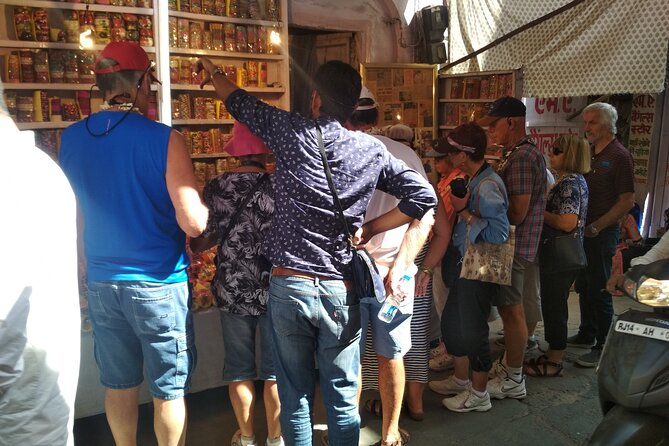
For $30.04, the value is not just the guide. You also get packaged drinking water, two local tastings, and a souvenir from local artisans, plus the tour uses a mobile ticket. That is a lot of “included” for a short walk, especially when the craft demonstrations are the main event.
The route also stays authentic by design. You start near Chaura Rasta and work into the inner back lanes, so you see Jaipur not as a museum, but as a working city with temple rhythms, bargaining energy, and workshop noise.
Keep walking: other routes through the bazaars
- Jaipur Bazaar & Food Walking Tour★ 5.0 · 281 reviews
- Heritage Walk & Street Food Tasting in Jaipur★ 5.0 · 158 reviews
- Magical Walk of Jaipur★ 5.0 · 121 reviews
- Cultural Walk and Food Tasting In Jaipur★ 5.0 · 118 reviews
A practical, craft-and-food walking route across the Pink City
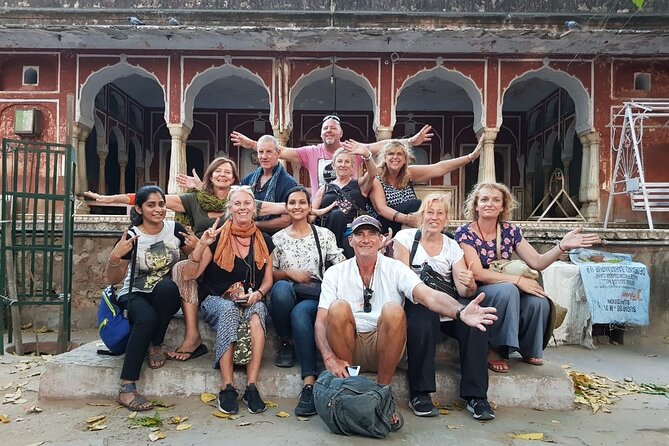
This is a 2 hours 30 minutes walk that focuses on artisans, bazaars, and religious landmarks at street level. Your group is capped at 15, so it does not feel like a stampede. And because the meeting point is near public transportation, you can slot this in without a big transportation headache.
You will cover a sequence of very different stops: a heritage start near the seven gates, hands-on artisan communities, a bridal-focused bazaar moment, a live bangle demo, then flower and spice trading streets to finish at the Flower Market area.
Key things I would plan around
- Seven gates and walled-city layout right at the start, so Jaipur makes sense fast instead of later
- Hands-on artisan stops, including metal beaters and bangle makers using traditional methods
- Two real tastings tied to Jaipur flavors, including pani puri and Mohanthal
- Bridal market viewing where you see traditional wedding shopping in action
- Market-side temple context, with explanations of what is happening as you pass by key religious spaces
- A small group size (max 15) that keeps the walk comfortable in narrow lanes
Entering the Pink City world from Golcha Cinema and the seven gates
Your walk begins at Golcha Cinema on Chaura Rasta Road, near New Gate in Bapu Bazar, right in the Pink City area. The first minutes matter because you do not start with random streets. You start with how Jaipur is organized, including the importance of the seven gates of the walled city.
That framing is a big deal for first-timers. Jaipur can look like one long maze of pink walls and gates until you understand the grid logic. Once you get that map-in-your-head, every lane feels like it has a reason. You also get a quick peek at how heritage homes still function, including a priest family living in a heritage mansion. It is not a long sit-down visit, but it sets the tone.
A small practical plus: there is an admission ticket included for this early stop (about 15 minutes). So you are not juggling tickets while trying to figure out where the group is heading next.
The narrow by-lanes: metal beaters, pani puri, Ayurveda, and royal echoes
After you leave the starting area, the walk pushes into Jaipur’s narrow by-lanes. This is where the city stops being postcard-shaped and turns into lived-in space.
Here is what you get in this stretch:
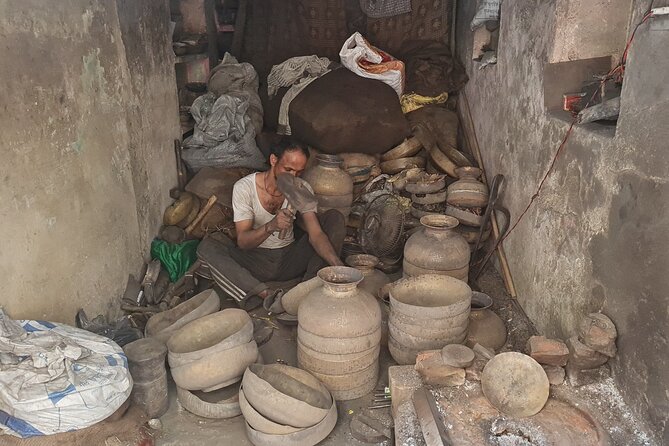
- A community of metal beaters, where you can see work that has been practiced for generations
- A wholesale snack focus on pani puri, which is fun because you are not just eating, you are watching the culture of quick street-food supply
- A visit to an Ayurveda center, where you can learn how traditional wellness fits into daily life
- Heritage lanes that were once visited by Prince Charles, which gives a surprising historical anchor to the streets you are walking on
This part works well because it is not one long museum lesson. It is a series of short stops inside working neighborhoods. The metal beating segment is especially valuable if you have any curiosity about how craft skills survive modernization. You see that the work is not just aesthetic, it is technique plus rhythm, repeated until it becomes second nature.
And yes, you also get food. The tour includes local tasting opportunities, and this is one of the key moments. If you like eating where locals eat and learning what you are tasting, this is the section you will feel most satisfied by.
One caution: because you are in busy market lanes, plan for strong smells and some sensory overload. Bring patience. Jaipur market streets are active, and your guide will help you navigate it safely and smoothly.
More of the 1727 grid, read out loud
A big heritage gate and a glimpse of royal-adjacent Jaipur
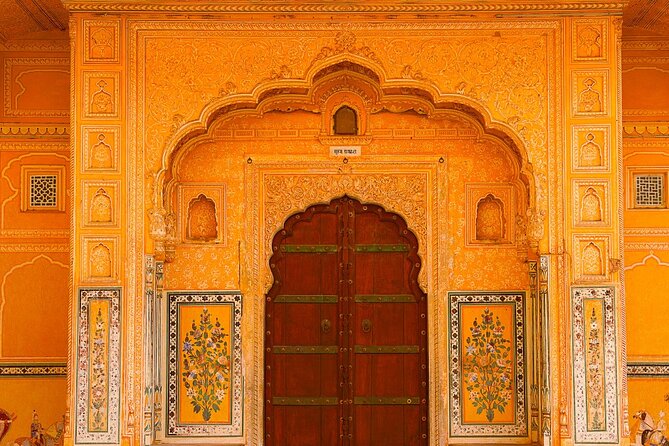
At the next point, you reach a large heritage gate that also serves as an entry gate connected to the residence area of Jaipur’s Royal family. This stop is more about the meaning of the space than about climbing through monuments.
You get the payoff of earlier context here. When you understand gates and walled-city planning from the start, a gate like this stops being just a pretty landmark. It becomes a functional piece of the city’s history and social structure.
If you are trying to understand Jaipur beyond fort walls and palaces, this is the right kind of stop. It is compact, visual, and it helps connect architecture to everyday routes.
Sodhya Halwai and the Bridal market moment with Mohanthal
Next up is Sodhya Halwai, one of the stops where the walk leans into color and ritual. You arrive at the Bridal market of Jaipur, a place described as colorful and very focused on traditional wedding shopping.
You can watch brides shopping for traditional wedding dress, which sounds simple, but it is actually one of those moments that makes a city feel real. People are carrying plans, families are negotiating choices, and you get to see how tradition shows up in commerce.
Then you shift to food again, with a tasting of Mohanthal, a Jaipur specialty. This is a smart move by the tour because it gives you contrast. Pani puri is loud and quick, while Mohanthal is richer and slower to appreciate. If your taste for sweets is even slightly open-minded, this tasting is worth taking seriously.
This stop runs about 15 minutes. Do not expect to browse forever. Think of it as a focused look, plus a bite that tells you what Jaipur does well when sweets are the main character.
Maniharo Ka Rasta: live bangle making from sealing wax
If you want proof that craftsmanship is still alive in Jaipur, this is the part. At Maniharo Ka Rasta, you walk through the street associated with bangle-making artisans and you get a live demonstration.
The tour description includes a specific traditional method: making traditional wrist bangles from sealing wax. Watching a demo like this in a working artisan lane is far more satisfying than seeing photos later, because you understand the pacing. You also notice how skilled the hands are, and how much repetition the craft relies on.
This is also a great section for practical souvenirs. The tour includes a souvenir from local artisans, and this is exactly the style of place where souvenirs should come from. If you are planning to buy something, this is where you get a sense of quality before you pick.
The downside, if you are sensitive to crowded hands-on spaces, is that demonstrations can get close. You will likely need to step in and out to get views, and you may have to pause for others. Just keep your expectations flexible.
Tripolia Bazar, flower and spice trading, and Isarlat Sargasooli
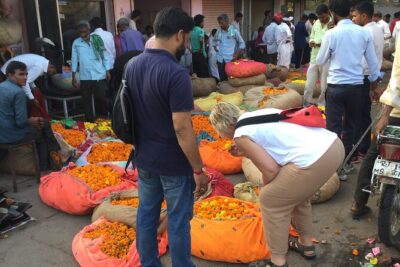
To close the walk, you head to Tripolia Bazar, a zone that blends sensory shopping with iconic city silhouette. You go past the oldest flower market of Jaipur and a spice market, which means your senses are working overtime in the best way.
You also walk past Isarlat Sargasooli, described as one of the tallest minarets in the area. Since this is a walk-by moment rather than a ticketed monument visit, it stays easy on your schedule. You still get the payoff of seeing something vertical and historic in the middle of market noise.
The endpoint is near the Flower Market area at Choti Chaupar in Tripolia Bazar, Modikhana. The tour runs about 20 minutes in this finishing stretch, giving you time to look, snack, and reset your eyes before you head off on your next plan.
Food strategy: two tastings that actually make sense
The tour includes two local food tasting opportunities, and the choices listed are very Jaipur-shaped.
- Paani puri at a wholesale snack market area
- Mohanthal at Sodhya Halwai
There is also mention of enjoying a hot cup of Masala chai during the walk. Even if you take just a sip, it helps break the heat and pace the sensory overload from the markets.
My practical tip: do not pack an extra snack right before this walk. You want room to taste, and you also want your stomach to stay calm when you are walking for 2.5 hours in active streets.
Pacing and group size, what feels easy and what feels hard
This is a small-group tour with a maximum of 15 people, which matters in Jaipur. Narrow lanes plus lots of people can turn a walk stressful. Here, smaller group size usually means you can keep a steady rhythm, and your guide can manage the flow.
Timing also supports comfort. The walk is roughly 2 hours 30 minutes, with many stops around 15 minutes and one slightly longer finish stretch around 20 minutes. That structure keeps the experience from dragging.
What might feel hard:
- The lanes can be uneven and crowded
- You will be standing during demos and market looks
- You will be walking continuously rather than taking long breaks
If you like structured walks with stops that are short but meaningful, you will enjoy it. If you want a slow sit-everywhere style tour, this might feel brisk.
Tips for first-timers in Jaipur before you take the walk
You do not need to be a craft expert to enjoy this. But you do need to be ready for a working city.
- Wear comfortable shoes with decent grip. You are on market streets.
- Bring water. Packaged drinking water is included, but it is still smart to sip steadily.
- Keep your camera strap secure. The Bridal market and artisan lanes are great for photos, but you are moving through crowds.
- Expect scents. Flowers and spices show up in a very physical way.
- If you are sensitive to noise, know that workshops like metal beating can be loud.
Also, the tour uses a mobile ticket, which is handy. Have your phone accessible at the meeting point.
Who this tour suits best
This walk fits best if you want Jaipur at ground level, with artisans and markets taking center stage.
It is a good match for:
- First-time visitors who want a quick framework for the walled city
- Food lovers who prefer specific tastings tied to local specialties
- People who like craft demonstrations and want to see how skills are made, not just sold
- Travelers who enjoy temple context explained in plain terms while walking
It might be less ideal if you want mostly monument interior time, because the tour focuses on street-level sights and market neighborhoods, and visits to monuments are not the core promise here.
Should you book Jaipur Heritage Walk – Artisans, Bazaars, Culinary, Temples?
Yes, if your goal is to understand Jaipur through craft, food, and everyday lanes. At $30.04, the combination of an English-speaking city explorer, water, two tastings, and a souvenir from local artisans gives you a lot to take home, even if you only have a single half day in the city.
I would especially recommend booking if you like hands-on moments like the metal beating community and the bangle-making demonstration from sealing wax. If that kind of experience is your style, this walk will feel like good value, not just a guided stroll.
FAQ
Where does the tour start and end?
The tour starts at Golcha Cinema on Chaura Rasta Road, near New Gate, Bapu Bazar, Pink City, Jaipur. It ends at the Flower Market area at Choti Chaupar, Tripolia Bazar, Modikhana, Jaipur.
How long is the Jaipur Heritage Walk?
The duration is approximately 2 hours 30 minutes.
What is included in the price?
Included are packaged drinking water, an experienced English-speaking city explorer, two local food tasting opportunities, and a souvenir from local artisans. A mobile ticket is used for the tour.
Is monument entry included?
The tour data says there is no visit of any monument unless specified. You may walk past notable religious or landmark structures, but monument entry is not the default included plan.
What food will I try?
The listed tastings include pani puri and Mohanthal, and the experience also mentions enjoying hot masala chai.
How big is the group?
The tour has a maximum of 15 travelers.
What if the weather is bad?
The experience requires good weather. If it is canceled due to poor weather, you will be offered a different date or a full refund.
More Heritage in Jaipur
- Heritage Walk & Street Food Tasting in Jaipur
★ 5.0 · 158 reviews - Private Full-Day Sightseeing Tour of Jaipur’s Heritage by Car
★ 5.0 · 110 reviews - Jaipur Heritage Walk with Rickshaw Ride
★ 5.0 · 105 reviews - Jaipur Heritage Evening Walk – The Twilight Magic of Pink City
★ 5.0 · 93 reviews - Nahargarh Water Walk – Guided 2-Hour Heritage Tour in Jaipur
★ 5.0 · 89 reviews - Jaipur Heritage Walking Tour – Local life, Havelis and Temples
★ 5.0 · 72 reviews
Keep Walking Through Jaipur
- Jaipur Bazaar & Food Walking Tour
★ 5.0 · 281 reviews - Heritage Walk & Street Food Tasting in Jaipur
★ 5.0 · 158 reviews - Magical Walk of Jaipur
★ 5.0 · 121 reviews - Cultural Walk and Food Tasting In Jaipur
★ 5.0 · 118 reviews - Jaipur Heritage Walk with Rickshaw Ride
★ 5.0 · 105 reviews - Jaipur Heritage Evening Walk – The Twilight Magic of Pink City
★ 5.0 · 93 reviews
More Tour Reviews in Jaipur
- Jaipur: Private Full Day Sightseeing Tour By Car with Guide
★ 4.9 · 1,839 reviews - 3-Hour Morning Bike Tour of Jaipur
★ 5.0 · 1,253 reviews - Jaipur: Private Sightseeing Day Tour with Guide by Car
★ 4.8 · 773 reviews - Jaipur: Full-Day City Tour with Car, Guide & Skip-the-Line
★ 4.8 · 512 reviews - Full-Day Jaipur Private Sightseeing Tour by Car with Guide
★ 5.0 · 472 reviews - Pink City Cooking Class
★ 5.0 · 452 reviews
Fresh on the site: newer Jaipur tours we have written up




Walking Tours, compared.
 ★ 5.0Jaipur Bazaar & Food Walking TourFrom $37281 reviews
 ★ 5.0Heritage Walk & Street Food Tasting in JaipurFrom $21158 reviews
 ★ 5.0Magical Walk of JaipurFrom $10121 reviews
 ★ 5.0Cultural Walk and Food Tasting In JaipurFrom $22118 reviews
Jaipur Heritage Walk with Rickshaw RideFrom $11105 reviews
★ 5.0Cultural Walk and Food Tasting In JaipurFrom $22118 reviews
Jaipur Heritage Walk with Rickshaw RideFrom $11105 reviews
 ★ 5.0Jaipur Heritage Evening Walk – The Twilight Magic of Pink CityFrom $3593 reviews
 ★ 5.0Nahargarh Water Walk – Guided 2-Hour Heritage Tour in JaipurFrom $3989 reviews
 ★ 5.0Jaipur Heritage Walking Tour – Local life, Havelis and TemplesFrom $1672 reviews
Browse the lists this tour appears in