

REVIEW · WALKING TOURS
Heritage Culture and History Walking Tour in Jaipur
Jaipur’s best stories are told one step at a time. This heritage walking tour strings together big icons like Jantar Mantar and the City Palace with quieter stops at temples and old bazaars, then ends at Isarlat Sargasooli for city views.
I love the practical pacing, you get about 2 hours and 25 minutes to see a lot without feeling rushed. I also love how the guides can answer real questions, and names like Adi, Aditya, Ankit, and Richi come up for their clear, friendly explanations.
One thing to consider: the walking tour price is only part of the total, because entry fees for Jantar Mantar, City Palace, Hawa Mahal, and Isarlat Sargasooli are listed as not included.
You’ll meet at Jantar Mantar (Malve Nagar, J.D.A. Market area) and finish at Isarlat Sargasooli near Sarkasuli (Gangori Bazaar area). It’s a private activity for just your group, and you’ll also get a water bottle plus an English and Spanish written guide.
If you like history mixed with daily-life sights, and you don’t mind a warm day and some street walking, this is a strong way to understand Jaipur beyond the postcard angles.
Quick highlights you will notice fast
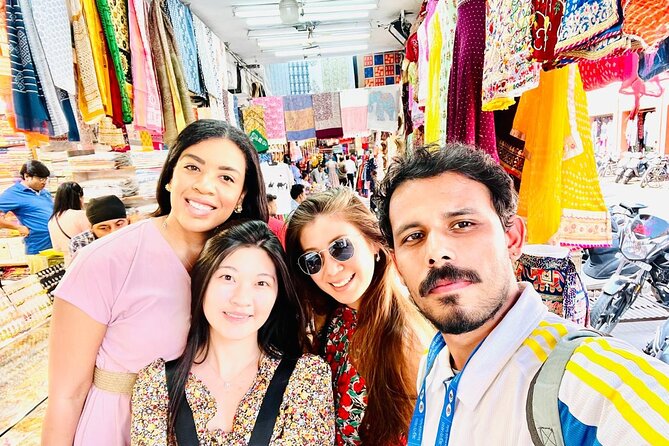
- Astronomy to royalty, starting at Jantar Mantar and moving on to the City Palace
- Temple moments with aarti, including what to watch for at Govind Devji Temple
- Big exteriors, no pressure, like Hawa Mahal viewed from the outside
- Market strolls with a no-buy vibe, including Chandi Ki Taksal and Johri Bazar
- A classic 18th-century finish, Isarlat Sargasooli for panoramic photos
- Guides that tailor their talk, with Q and A style explanations in English
Keep walking: other routes through the bazaars
- Jaipur Bazaar & Food Walking Tour★ 5.0 · 281 reviews
- Heritage Walk & Street Food Tasting in Jaipur★ 5.0 · 158 reviews
- Magical Walk of Jaipur★ 5.0 · 121 reviews
- Cultural Walk and Food Tasting In Jaipur★ 5.0 · 118 reviews
Jantar Mantar: the astronomy start that sets the tone
The tour kicks off at Jantar Mantar, right where you can pick up your bearings and tickets. The guide meets you at the ticket counter and frames what you are looking at through the vision of Raja Sawai Jai Singh II. Even if you are not a science person, the place makes sense because it is tied to a royal project and a practical goal: measuring time and the sky.
You will spend about 20 minutes here. Expect a walkthrough of the instruments and what they were designed to observe. This matters because it gives you context for the rest of the route. Jaipur was planned with serious intention, and Jantar Mantar is proof.
Admission note: Jantar Mantar is listed at 200 INR and is not included, so plan for that extra cost.
Practical tip: go in ready to look upward. The instruments are spread out, and your guide can point out what to notice so you do not waste time scanning randomly.
City Palace: royal architecture, but explained like a story
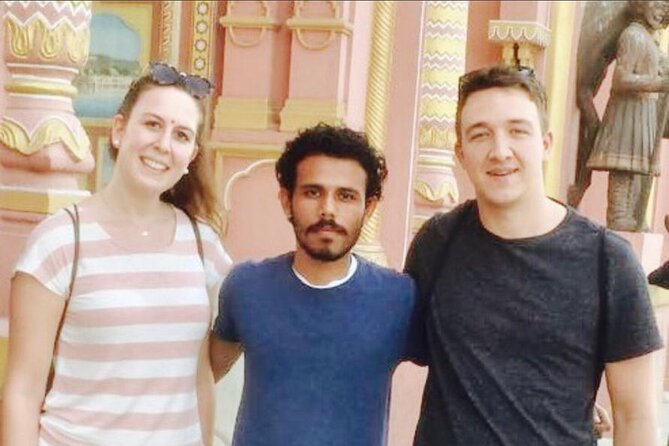
From Jantar Mantar, you head on foot toward the City Palace of Jaipur, with about another 20 minutes allocated. The City Palace is large, and it can feel like a lot if you show up with no direction. What makes this stop work is that your guide ties architectural details to the royal family, explaining why particular elements mattered and how the complex functioned.
Admission note: City Palace is listed at 1000 INR and is not included. Since it is the priciest listed ticket on the route, I strongly suggest you treat it as the centerpiece. If you are tight on time or budget, this is the place where your guide’s storytelling pays off most.
What to watch for: how the spaces connect and how the design reflects status, power, and the everyday life of the court. You do not need to memorize dates. You just need a guide who can point out what you are seeing.
Govind Devji Temple and the aarti moment
Next comes Govind Devji Temple, also around 20 minutes. This stop stands out because it is not only about what the building looks like, it is about what happens inside. You can witness the aarti ceremony and feel the change in pace that happens when you step from street noise into a sacred rhythm.
The tour description calls out the calm atmosphere, which is exactly what you should expect. If you have never watched an aarti before, treat it like a cultural lesson you can see with your own eyes. Your guide can help you understand what you are observing without turning it into a lecture.
Admission note: it is listed as “not included,” but no specific INR price is provided in the information you have, so your best move is to bring some small cash just in case the temple asks for a basic entry or donation.
Practical tip: dress respectfully. You are walking and going from a market context to a temple context, so having a light scarf or covering can save you stress.
Chandi Ki Taksal, Rama’s temple, and the street-level Jaipur feel
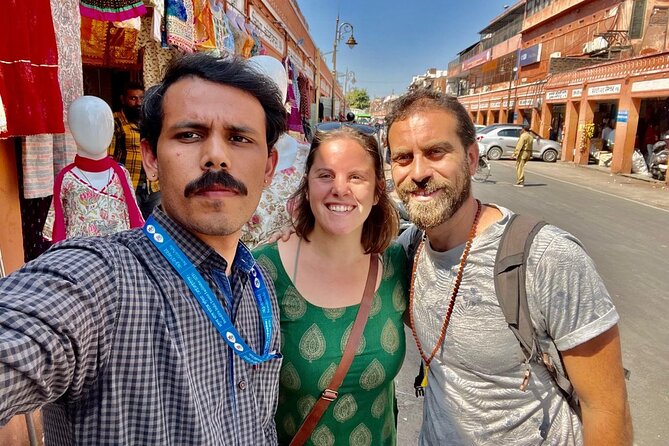
After temples, the route shifts into neighborhood texture, starting with Chandi Ki Taksal, described as a local bazaar existing since the 17th century. This is one of those stops that can be either quick sightseeing or a real culture moment, depending on your energy. Here, the tour is clear about its goal: you are welcome to explore on your own discretion, and they do not promote pushing purchases.
That balance is important. If you have ever done guided walks where the guide is quietly steering you into shops all the time, you will appreciate this approach. You still get context about the area, but you control how much you shop.
Then you visit Mandir Shri Ram Chandra Ji for about 20 minutes, with admission free listed. This temple stop is a quieter spiritual counterpart to Govind Devji. You are looking for the same type of things each time: atmosphere, architecture, and the spiritual significance explained in plain language.
Why this combo works: you are not just collecting landmarks. You are moving between religious spaces and everyday commerce zones, which is how Jaipur actually feels when you live there.
More of the 1727 grid, read out loud

Hawa Mahal from the outside: why seeing it matters even without entry
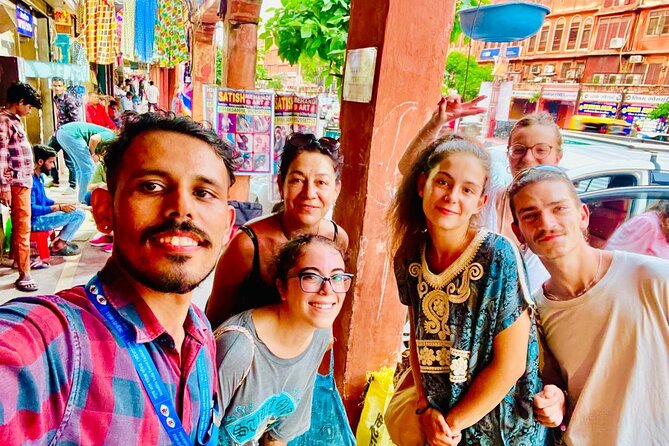
The tour includes Hawa Mahal (Palace of Wind), with about 15 minutes here. There is an important detail: you will not go inside. You get to admire the facade and learn about its history and design from the sidewalk view.
For me, that is a smart approach for a walking tour. Hawa Mahal’s most famous feature is its outside look, and you can appreciate it best from the angle you have without burning time on interior logistics. Also, the route keeps momentum.
Admission note: Hawa Mahal is listed at 200 INR and is not included, but since you are not going inside, the ticket requirement may depend on how entry is managed that day. Still, budget for it, and ask your guide what you need right at the gate.
Photo tip: Hawa Mahal looks different depending on light and street angle. If you want photos with fewer people, be ready to shift a step or two while your guide explains what you are seeing.
Mandir Shree Laxminarayan ji: a peaceful break that doesn’t feel random

After Hawa Mahal, you head to Mandir Shree Laxminarayan ji for about 25 minutes, and admission is free. This stop gives you a longer breath of calmer space. The tour frames it as a temple dedicated to Lord Vishnu and Goddess Laxmi, and the emphasis is on the serene ambiance and architectural details.
This matters because the route includes a lot of “look, walk, look again.” Adding a longer temple visit helps you reset. You get a moment where you are not negotiating streets or tickets, you are just observing.
Practical tip: stay present during the explanation. If you treat this stop like a pause for selfies, you miss the way the guide connects religious significance to the building choices.
Johri Bazar and Katla Purohit Ji Ka: shopping streets with a learning focus
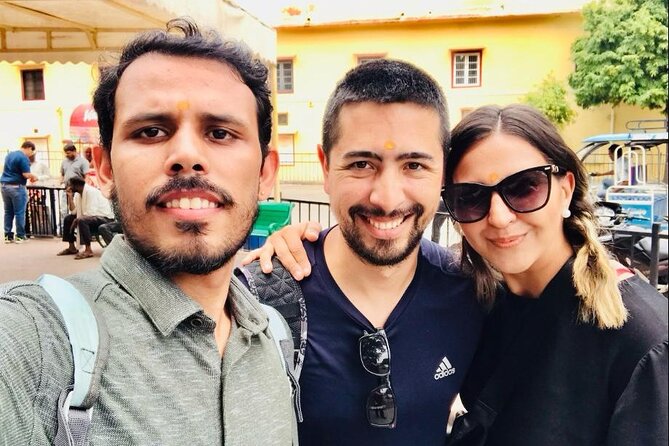
From the temple zone, the walking continues into markets. You will head to Johri Bazar, described as famous for jewelry and handicrafts, and then explore the narrow streets of Katla Purohit Ji Ka, another historic market area.
Here is how to think about this part of the tour. Markets can overwhelm you fast, especially when you are tired and already carrying your phone like it is your third arm. The guide’s job is to help you make sense of what you are seeing, not just point at shops.
The tour description also repeats that they do not promote buying anything. That is a good signal if you want authentic street life without feeling pressured.
Snack note: some guides on similar walks are known to pause for small treats like kulfi or ice cream when the timing works. The important thing for you is the purpose, not the food. The market stops are better when you slow down enough to notice materials, signage, and how people move through the streets.
If shopping is your priority, you can use the time to browse. If shopping is not your thing, treat these stops like a living museum of commerce.
Isarlat Sargasooli: the 18th-century tower finale for real views
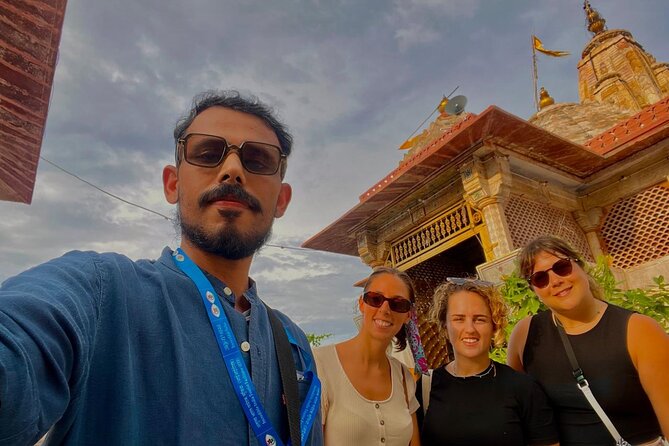
The tour wraps at Isarlat Sargasooli, a historic tower associated with the 18th century. You get about 10 minutes here, and the information highlights panoramic city views and a perfect spot for photography.
This ending is clever because it gives you a final “connect the dots” moment. Earlier you learned about the city’s design and cultural spaces. Now you see how it all sits in relation to you.
Admission note: Isarlat Sargasooli is listed at 200 INR and is not included, so again, budget for the last ticket.
Time tip: if you want photos without a crowd, arrive ready to move quickly. You do not control the total time at the tower, but you can control how efficiently you frame and capture shots while your guide is finishing the explanation.
Price and logistics: value math you should do before you go
The tour price is $20, lasts about 2 hours and 25 minutes, and includes a water bottle plus an English and Spanish written guide. It is also described as private for your group, with group discounts and a mobile ticket.
But here is the honest value calculation. Several major stops require paid entry tickets that are not included:
- Jantar Mantar: 200 INR
- City Palace: 1000 INR
- Hawa Mahal: 200 INR
- Isarlat Sargasooli: 200 INR
That adds up to 1,600 INR in listed entry fees for those four paid stops. Two temple visits on the route are listed as admission free (Mandir Shri Ram Chandra Ji and Mandir Shree Laxminarayan ji). For Govind Devji Temple, the info says not included but does not provide a listed INR.
So the tour is good value if you want a guided, ordered route through Jaipur’s major icons plus markets. It is still worth considering if you already plan to visit City Palace and Jantar Mantar anyway, because paying for those tickets plus adding a guided walkthrough often ends up being the more efficient choice.
Logistics in plain terms:
- Meeting point is at Jantar Mantar in the Malve Nagar area.
- The tour ends at Isarlat Sargasooli near Sarkasuli, by the Aatish Market area.
- It is stated to be near public transportation and suitable for most travelers.
- You’ll be walking, with multiple stops around 15 to 25 minutes each, plus market time.
If you have mobility limits or you dislike heat, plan your day around cooler morning or late afternoon hours. The time blocks here assume steady walking.
What type of traveler should choose this walk
This is a good match if you:
- want a structured route that covers astronomy, palace architecture, temples, and markets in one go
- like asking questions and getting straight answers in English (and the tour materials include an English and Spanish written guide)
- travel with family, because the tour is described as engaging enough for children when history is explained in an approachable way
- enjoy both big landmarks and the human scale of street life in places like Chandi Ki Taksal and Katla Purohit Ji Ka
It may not be ideal if you:
- hate paying multiple separate entry fees
- want long hours at a single site, since most stops are around 10 to 25 minutes
- prefer fully indoor monuments only, because you will spend time outdoors and in bazaars
Should you book this Jaipur Heritage Culture and History Walking Tour?
I would book it if you want a smart, guided route that turns Jaipur from a list of sights into a connected story. The highlights for me are the order of the stops (starting with Jantar Mantar, then moving into royalty and then temples), plus the way the guides are described as friendly and able to answer questions, often with tailored attention to what you care about.
If your goal is to maximize landmark coverage without building a self-guided plan, this walk makes it easy. Just go in with one clear mindset: budget for entry fees, and bring comfortable shoes. Do that, and you’ll end the day with both photos from Isarlat Sargasooli and a better understanding of why these places matter.
FAQ
Which entry tickets are included in the tour price?
The tour price includes the experience, but several major admissions are listed as not included. Jantar Mantar is 200 INR, City Palace is 1000 INR, Hawa Mahal is 200 INR, and Isarlat Sargasooli is 200 INR.
How long is the walking tour in Jaipur?
The duration is about 2 hours and 25 minutes.
What is included in the $20 tour price?
Included items are a water bottle and an English and Spanish written guide.
Where do I meet the guide?
The start point is Jantar Mantar, Malve Nagar, J.D.A. Market, Kanwar Nagar area, Jaipur (302002).
Where does the tour end?
The tour ends at Isarlat Sargasooli, near Sarkasuli in Jaipur.
Do we visit Hawa Mahal inside?
No. You will not go inside Hawa Mahal. You can admire the facade and learn about its design and history from outside.
Is this a private tour or shared with strangers?
It is private. Only your group will participate.
Can I cancel and get a full refund?
Yes, free cancellation is available. To receive a full refund, you must cancel up to 24 hours before the experience start time.
What languages are covered for the guide materials?
The tour includes an English and Spanish written guide.
Keep Walking Through Jaipur
- Jaipur Bazaar & Food Walking Tour
★ 5.0 · 281 reviews - Heritage Walk & Street Food Tasting in Jaipur
★ 5.0 · 158 reviews - Magical Walk of Jaipur
★ 5.0 · 121 reviews - Cultural Walk and Food Tasting In Jaipur
★ 5.0 · 118 reviews - Jaipur Heritage Walk with Rickshaw Ride
★ 5.0 · 105 reviews - Jaipur Heritage Evening Walk – The Twilight Magic of Pink City
★ 5.0 · 93 reviews
More Tours in Jaipur
- Jaipur: Private Full Day Sightseeing Tour By Car with Guide
★ 4.9 · 1,839 reviews - 3-Hour Morning Bike Tour of Jaipur
★ 5.0 · 1,253 reviews - Jaipur: Private Sightseeing Day Tour with Guide by Car
★ 4.8 · 773 reviews - Jaipur: Full-Day City Tour with Car, Guide & Skip-the-Line
★ 4.8 · 512 reviews - Full-Day Jaipur Private Sightseeing Tour by Car with Guide
★ 5.0 · 472 reviews - Private Full Day Jaipur Sightseeing Tour By Tuk Tuk
★ 5.0 · 382 reviews
More Tour Reviews in Jaipur
- Jaipur: Private Full Day Sightseeing Tour By Car with Guide
★ 4.9 · 1,839 reviews - 3-Hour Morning Bike Tour of Jaipur
★ 5.0 · 1,253 reviews - Jaipur: Private Sightseeing Day Tour with Guide by Car
★ 4.8 · 773 reviews - Jaipur: Full-Day City Tour with Car, Guide & Skip-the-Line
★ 4.8 · 512 reviews - Full-Day Jaipur Private Sightseeing Tour by Car with Guide
★ 5.0 · 472 reviews - Pink City Cooking Class
★ 5.0 · 452 reviews
Fresh on the site: newer Jaipur tours we have written up




Walking Tours, compared.
 ★ 5.0Jaipur Bazaar & Food Walking TourFrom $37281 reviews
 ★ 5.0Heritage Walk & Street Food Tasting in JaipurFrom $21158 reviews
 ★ 5.0Magical Walk of JaipurFrom $10121 reviews
 ★ 5.0Cultural Walk and Food Tasting In JaipurFrom $22118 reviews
Jaipur Heritage Walk with Rickshaw RideFrom $11105 reviews
★ 5.0Cultural Walk and Food Tasting In JaipurFrom $22118 reviews
Jaipur Heritage Walk with Rickshaw RideFrom $11105 reviews
 ★ 5.0Jaipur Heritage Evening Walk – The Twilight Magic of Pink CityFrom $3593 reviews
 ★ 5.0Nahargarh Water Walk – Guided 2-Hour Heritage Tour in JaipurFrom $3989 reviews
 ★ 5.0Jaipur Heritage Walking Tour – Local life, Havelis and TemplesFrom $1672 reviews
Browse the lists this tour appears in