
REVIEW · TUK-TUKS
Jaipur Tour by Tuk-Tuk
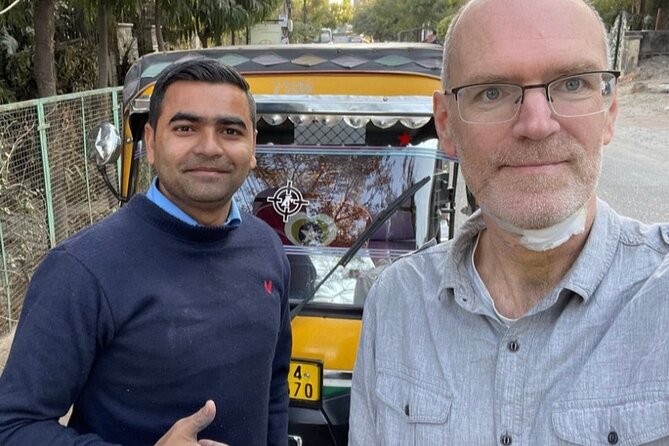
Jaipur hits different from a tuk-tuk. In a private 9 to 10 hour loop through the Pink City, you ride in comfort with a tuk-tuk and an English-speaking driver who also guides you. I love how this route helps you cover more ground than a walking day, and you’ll likely enjoy the way the schedule can be tailored around your pace and interests.
The main thing to plan for is cost beyond the headline price. Admission fees and meals cost extra, plus there can be camera fees at monuments, so budget for tickets before you go.
Key points at a glance
- Private tuk-tuk with an English-speaking driver-guide, so you’re not stuck with vague directions
- Hotel (and station) pickup and drop-off saves time, especially in traffic
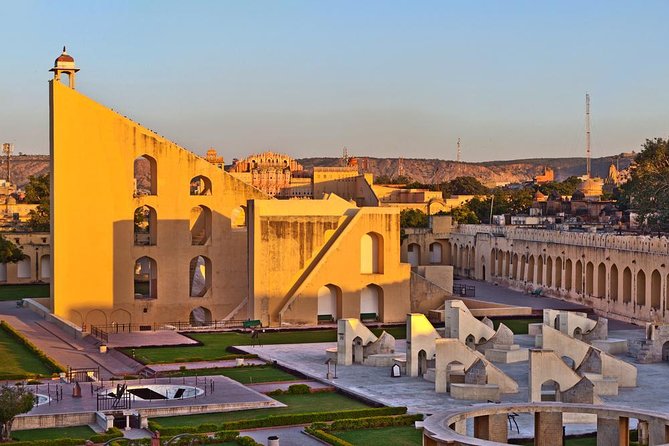
- A strong mix of Jaipur icons: Hawa Mahal, Jantar Mantar, City Palace, Amber Fort
- Short stops that still matter: stepwell views at Panna Meena ka Kund and the floating look of Jal Mahal
- You get a daylight “big picture” of Jaipur, with time to wander the Pink City bazaar at the end
- Extra flexibility is real, with drivers like Naresh (and sometimes Rauf) known for adjusting the plan and giving safety tips
Other ways to spend the same hours in Jaipur:
- Jaipur: Private Full Day Sightseeing Tour By Car with Guide★ 4.9 · 1,839 reviews
- 3-Hour Morning Bike Tour of Jaipur★ 5.0 · 1,253 reviews
- Jaipur: Private Sightseeing Day Tour with Guide by Car★ 4.8 · 773 reviews
- Jaipur: Full-Day City Tour with Car, Guide & Skip-the-Line★ 4.8 · 512 reviews
Why a tuk-tuk day makes sense in Jaipur
Jaipur is built for movement. The sites spread out, the streets can get chaotic, and midday heat can make walking feel like a bad life choice. A tuk-tuk tour turns that into an advantage.
I like that you’re not just “transported between stops.” Your driver is there to help you make sense of what you’re seeing, and that changes the whole day. With an English-speaking driver-guide, you can ask quick questions on the go, get practical context before you enter each monument, and still keep the pace friendly.
Also, the fact that it’s private matters. You can slow down at photo viewpoints, spend more time at a place that hooks you, or cut something if your energy is running low. That kind of control is hard to get on fixed-group bus tours.
Price and value: what the $5 part does, and what costs extra
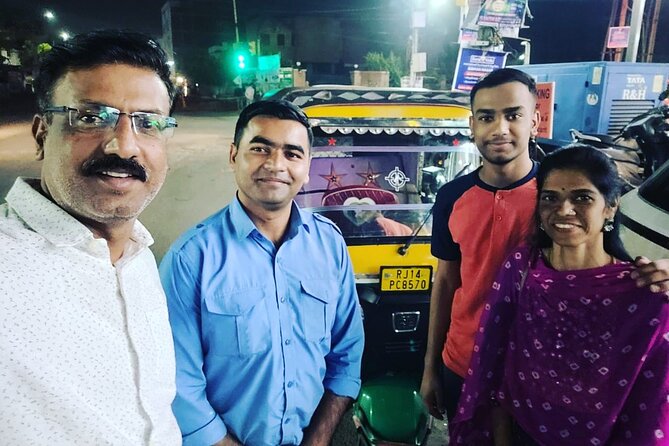
The headline price is very low, but here’s the honest value math: what you’re paying for mostly is the transportation and guiding. The tour includes a private tuk-tuk with an English-speaking driver, fuel charge, parking, and taxes. You also get bottle water and a cup of tea, plus pickup and drop-off from your hotel or other Jaipur locations.
Then comes the part that every sightseeing day has: monument access. The tour explicitly lists admission fees as not included. The add-ons shown include:
- Albert Hall Museum admission (listed as $3.62 or $6.64 per person)
- Hawa Mahal admission ($2.41 per person)
- City Palace of Jaipur and Amer (listed together as $6.64 per person)
- Jantar Mantar admission ($2.41 per person)
So, the best way to see this is as a low-cost way to buy a high-touch day plan, then top it up with tickets based on the sights you want most. If you care a lot about museums and palaces, your total day cost will be higher. If you’re mainly there for quick icon photos and walking lanes, it stays more manageable.
How the English-speaking driver-guide runs the day
This tour format is simple: you meet your driver, you ride, and you get direction for the moments that matter. Based on what has worked well for guests, drivers like Naresh (and sometimes Rauf) are often praised for being friendly, professional, and good at communication in advance. People also highlight feeling safe, with clear instructions once you arrive at each site.
Here’s how that helps you in real life:
- You waste less time figuring out where to go inside big complexes.
- You get practical expectations, like what to expect at Jantar Mantar before you climb between instruments.
- If you want to adjust the order or add a fun cultural stop, the tour can bend. One example from the experience is ending the day at Choki Dhani, showing that the driver can extend the experience beyond the core monuments.
You should still bring a flexible mindset. With nine to ten hours on the clock, you’ll want your driver to keep an eye on time, especially when you’re aiming to hit Amber Fort and several old-city sights in one day.
Stop by stop: what each Jaipur highlight feels like
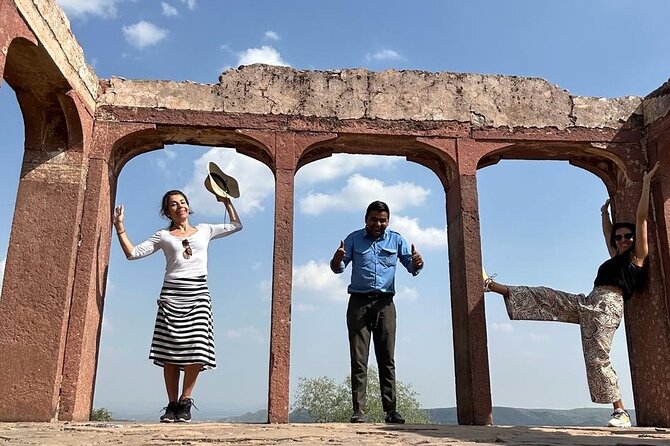
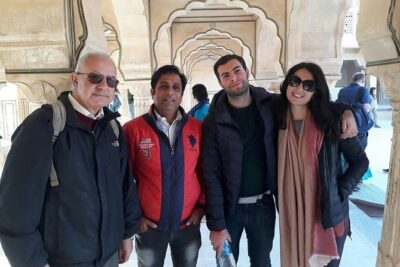


Albert Hall Museum for a first taste of Jaipur’s architecture
You start with the Albert Hall Museum toward the end of the day, which can be a nice choice if you’re aiming for gentler light and fewer rush-hour crowds. The building itself is a major attraction, with Indo-Saracenic architecture that mixes design influences in a way that feels very Jaipur.
Plan for about an hour and a half. Admission is not included, so factor that into your ticket budget. Also, if you’re not the type to read every label, you can still enjoy the big visual impression of the space, then use your time for the most interesting exhibits for your interests.
If you only do one museum moment in Jaipur, this is the one I’d pick for the atmosphere and architectural payoff.
Hawa Mahal: the breeze palace from the outside and the inside ticket reality
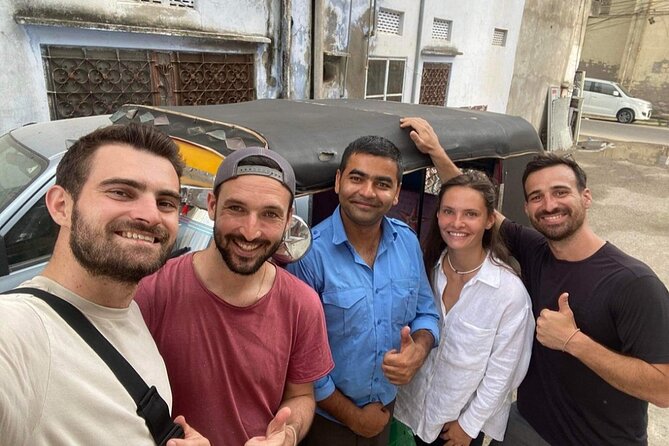
The Hawa Mahal, the Palace of Breeze, is the classic Jaipur photo. The pink façade shaped like a pyramid is the headline, but it also has a story tied to Maharaja Sawai Pratap Singh and the way royal women were housed in the palace for viewing life below.
You’ll typically get around an hour here. The ticket is listed as not included, with Hawa Mahal admission shown at $2.41 per person. If you’re budgeting, remember this is one of the sights where you pay the ticket fee even if most of the famous look is outside. The good news is that seeing it up close gives you a real sense of how the façade dominates the street.
A quick tip: stand close enough to catch the façade details, then walk just a bit away for the “pyramid” effect. This site rewards that two-step approach.
Jantar Mantar: Jaipur’s giant instruments that still feel futuristic
Next up is Jantar Mantar, the huge astronomical observatory by Maharaja Jai Singh. This is the stop that turns Jaipur from just pretty into actually brainy.
You’ll have around an hour. The complex is packed with huge sundials and angular instruments used by royal astronomers. It’s a World Heritage Site, and even if you don’t know astronomy terms, you can still watch how the structures work in theory: shadow, angle, and position.
Ticket cost is shown as not included at $2.41 per person. A small caution: camera fees at monuments are listed as not included, so you’ll want to be ready for the possibility of extra costs if you plan to photograph inside certain areas.
I love this stop because it’s one of the few places where Jaipur’s “royal spectacle” turns into visible science.
City Palace: royal rooms, exhibits, and practical limits on photos
A short ride brings you to the City Palace. It sits close to Jantar Mantar and includes the Chandra Mahal and Mubarak Mahal palaces, along with other buildings that still connect to royal legacy.
You’ll typically get about an hour and a half. Admission is not included, with City Palace and Amer ticket pricing listed as $6.64 per person. One practical detail to keep in mind: photo rules can be strict. In this experience, the City Palace portion has been noted as a place where photos may not be allowed inside buildings, while outside views are easier.
So, approach it like this: walk, read what you can, then focus on exterior photographs and the overall layout. Don’t plan your day around one perfect inside shot.
Amber Fort and the hill-top ride you actually feel in your body
Now for the big one: Amber Palace, often called Amber Fort. It dates to the 16th century and sits on a hilltop about 11 km outside the Pink City. Getting there by vehicle is part of the fun, because you feel the approach, and it’s easier than wrestling traffic in your own car if you’re new to the city.
The fort stop is around two hours, which is a good amount of time. Admission is not included, and it’s grouped with City Palace pricing as $6.64 per person in the information. Once you park, expect a short walk from the car to reach the entrance.
Two practical thoughts:
1) If you’re sensitive to stairs or uneven ground, go slow at your own pace.
2) If you want photos, arrive ready to pause. Amber is a place where the best images come from angles you find after walking a bit.
Panna Meena ka Kund: the stepwell moment you can do in minutes
Near Amber Fort is Panna Meena ka Kund, a 16th-century stepwell (baoli). It has eight levels of steps down to the water and is no longer in use, but you can follow the steps down if you want.
This stop is short, about 15 minutes, and it’s free. That makes it a great add-on when you want variety without losing time. It also gives you a different side of Rajasthan architecture and water engineering.
If you’re traveling with anyone who loves oddball structures, this is your “how did they build this?” pause.
Jal Mahal: the water palace that looks like it floats
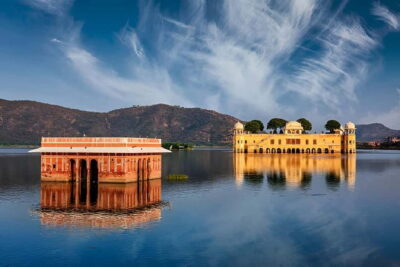
Still near Amber Fort is Jal Mahal, a Rajput-style water palace that seems to float on Man Sagar Lake. It dates from the 17th century and was once a favorite palace of the Jaipur royal family.
You get a quick 15-minute stop, and it’s also free. Because it’s short, your goal should be simple: catch the look from the best viewpoint your driver can place you at, then move on before the next site pulls you.
If you’re expecting to wander around the palace, manage expectations. This is more about the sightline and the photo moment than a long visit.
Gaitore Ki Chhatriyan: royal tombs near Nahagarh Fort
You then head to Gaitore Ki Chhatriyan, also known as Royal Gator, close to Nahagarh Fort. This area has ancient tombs and mausoleums of Jaipur Maharajas and the royal family, including the tomb of the city founder Jai Singh.
Plan about an hour. Ticket cost isn’t included in the information for this stop. The vibe is quieter than the big-city icons, and it’s a nice contrast after palace crowds.
If you like marble domes and columns, this is likely your kind of stop. It’s also a good moment for photos if camera policies are straightforward.
Pink City bazaar time: shop lanes, spices, and the last stretch of the day
To finish, you’ll spend about an hour and a half in the Pink City area, focusing on bazaars and shopping streets. This is where Jaipur feels like a working city: stalls with spices, fruit, jewellery, clothes, and everyday local trade.
It’s free entry, but it’s not “free” in the sense of time. If you stop to browse, one shop becomes three, then suddenly you’ve spent 45 minutes and the sun is doing its own schedule.
I like this ending because it gives you choices. If you want souvenirs, this is the moment. If you just want atmosphere, keep it short and then let your driver guide you back to the tuk-tuk.
A practical suggestion: set a tiny goal for the bazaar, like finding one spice blend or one textile piece. It prevents spending the whole day decision-blank.
What to bring so your day feels smooth
This is a long day at about nine to ten hours, so comfort matters.
Bring:
- Water and a light layer if evenings feel cool
- Comfortable shoes for walking, especially at Amber Fort and stepwell steps
- A small amount of cash for admission add-ons and any camera fees
- Your best patience for waiting at ticket lines, even when your guide does his part
Also, the tour includes bottle water and tea, which helps early on. Still, you’ll want your own rhythm for hydration during the busiest stops.
Best for first-time Jaipur visitors and families with mixed interests
This tour is built for first-time visitors who want the highlights without turning the day into a logistics puzzle. If you only have one full day, this is a strong way to see a lot of Jaipur without hopping between cities or renting your own ride.
It’s also a good match for mixed groups, like someone who loves architecture plus someone who wants marketplaces. The itinerary includes palaces, a major observatory, a museum, and a bazaar finish, so you’re not betting everything on one theme.
For families, the combination of short free stops (Panna Meena ka Kund, Jal Mahal) and longer palace moments makes it easier to manage energy levels. Just remember there are walking segments and some steps at the sites.
Should you book this Jaipur tuk-tuk tour?
If you want a low-cost, high-coverage day where someone local handles timing and guidance, this is an easy yes. The private tuk-tuk with an English-speaking driver-guide, plus pickup and drop-off, is a big quality-of-life win when it’s your first time in Jaipur.
I’d think twice if you hate spending extra money on admission fees and camera rules. The tour explicitly notes tickets and meals cost extra, and multiple major sights have per-person admission charges.
But if you’re okay with topping up ticket prices for the best-known icons, you’ll likely love the day for its mix of palaces, science, architecture, and that end-of-day bazaar stroll where Jaipur feels real.
More Tours in Jaipur
- Jaipur: Private Full Day Sightseeing Tour By Car with Guide
★ 4.9 · 1,839 reviews - 3-Hour Morning Bike Tour of Jaipur
★ 5.0 · 1,253 reviews - Jaipur: Private Sightseeing Day Tour with Guide by Car
★ 4.8 · 773 reviews - Jaipur: Full-Day City Tour with Car, Guide & Skip-the-Line
★ 4.8 · 512 reviews - Full-Day Jaipur Private Sightseeing Tour by Car with Guide
★ 5.0 · 472 reviews - Private Full Day Jaipur Sightseeing Tour By Tuk Tuk
★ 5.0 · 382 reviews
More Tour Reviews in Jaipur
- Jaipur: Private Full Day Sightseeing Tour By Car with Guide
★ 4.9 · 1,839 reviews - 3-Hour Morning Bike Tour of Jaipur
★ 5.0 · 1,253 reviews - Jaipur: Private Sightseeing Day Tour with Guide by Car
★ 4.8 · 773 reviews - Jaipur: Full-Day City Tour with Car, Guide & Skip-the-Line
★ 4.8 · 512 reviews - Full-Day Jaipur Private Sightseeing Tour by Car with Guide
★ 5.0 · 472 reviews - Pink City Cooking Class
★ 5.0 · 452 reviews
Fresh on the site: newer Jaipur tours we have written up



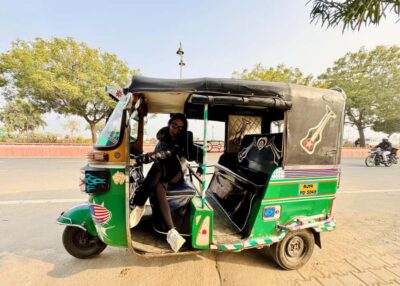
Tuk-Tuks, compared.
 ★ 4.8Private Full-Day Sightseeing Tour by Tuk-TukFrom $2573 reviews
 ★ 5.0Private Full Day Jaipur Sightseeing Tour By Tuk TukFrom $5382 reviews
 ★ 4.9Full-Day Private Sightseeing Tour by Tuk TukFrom $9166 reviews
 ★ 5.0Jaipur Sightseeing by Tuk-TukFrom $4145 reviews
 ★ 5.0Jaipur Tuk-Tuk Tour with Flower Market VisitFrom $6124 reviews
 ★ 5.0Jaipur Tour by Tuk-Tuk or Car with Flower MarketFrom $6120 reviews
 ★ 5.0Jaipur Sightseeing Tuk-Tuk TourFrom $5117 reviews
 ★ 5.0Private Full Day Jaipur Tour by Tuk-TukFrom $6116 reviews
Browse the lists this tour appears in