
REVIEW · JAIPUR BLOCK PRINTING & CRAFT WORKSHOPS
Hands-on Block Printing Workshop
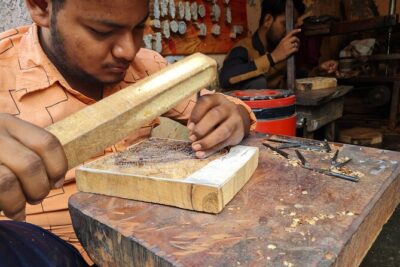
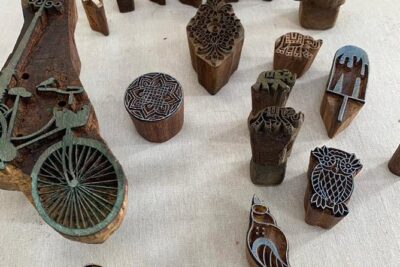
Carving wooden blocks turns quiet time into wearable art. In this Rajasthan workshop, you learn the basics of block printing and leave with a unique scarf or sarong you made yourself. I love the small group size and the fact that the session is truly hands-on from the start. One consideration: it is a fast, practice-heavy 2 hours, so expect a short learning curve if you have never worked with carved stamps before.
You will work through a clear creative system, not just random stamping. You get introduced to block printing history and cultural significance, then you learn the design logic behind Gad, Rekh, and Datte styles and how to build patterns with layered printing and water-based pigments. A practical drawback to keep in mind: the technique is satisfying, but it can be a little exacting, so your first attempts might need small fixes.
The vibe is also boosted by the studio setup. At Creatis, you work with friendly support, and you may even be able to watch pros at work in the small factory next door, which helps you understand how much skill is behind each print. With instruction available in English and Hindi, this is an easy creative stop for many kinds of visitors who want something off the typical photo route.
Key things to know before you print
- Small group of up to 10 means more help and less waiting around.
- Gad, Rekh, Datte design method gives you structure for your pattern choices.
- Water-based pigments and layering let you experiment with colors in real time.
- Sanganeri-inspired designs help you choose something immediately workable.
- Your Pico stitch scarf or sarong is included, so you are not just learning, you are taking something home.
Other things you can learn to make here
- Pink City Cooking Class★ 5.0 · 452 reviews
- Jaipur Market Tour & Vegetarian Rajasthani Home Cooking Class★ 5.0 · 113 reviews
- Cooking Class in Jaipur – Family Experience with Meal & Transport★ 5.0 · 101 reviews
- Interactive Cooking Class with a Local Family in Jaipur★ 5.0 · 90 reviews
Why this Rajasthan block printing workshop feels like a real craft lesson
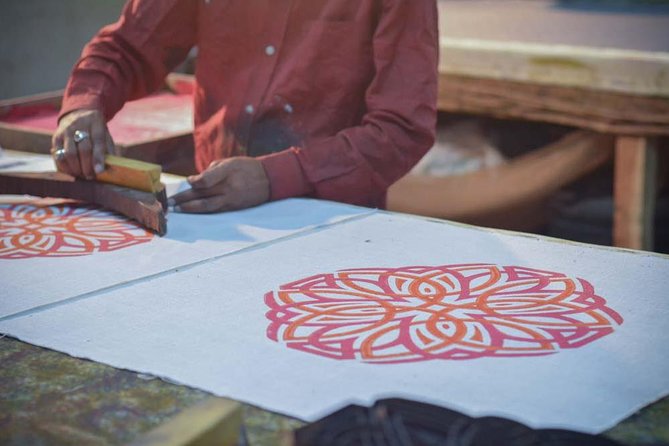
Rajasthan is full of color, texture, and patterned life, but block printing is one of the best ways to get past surface-level souvenirs. You are not just looking at prints. You are learning how a design becomes fabric using carved wood blocks, pigment, and careful placement. That makes the experience feel both cultural and personal at the same time.
What I like most is the payoff. By the end of the class, you have a wearable result. That matters because it turns the workshop into something you can actually use later, not a disposable activity. The included Pico stitch scarf or sarong also means you can leave feeling productive, even if you are not the type who usually does arts and crafts.
Another big reason this works is pacing. The session is 2 hours, so it is short enough to fit into a day, but it is long enough for real practice. You get a brief intro to the tools and techniques, then you get to print with wooden blocks, test colors, and build a design you chose.
What happens in the 2-hour class at Creatis
The session runs for about 2 hours with a small group limited to 10 participants. You start with a structured introduction to block printing: where the technique comes from, why it matters culturally, and what tools and materials you will be working with. It is not a long lecture. It is meant to set you up so you can start printing quickly.
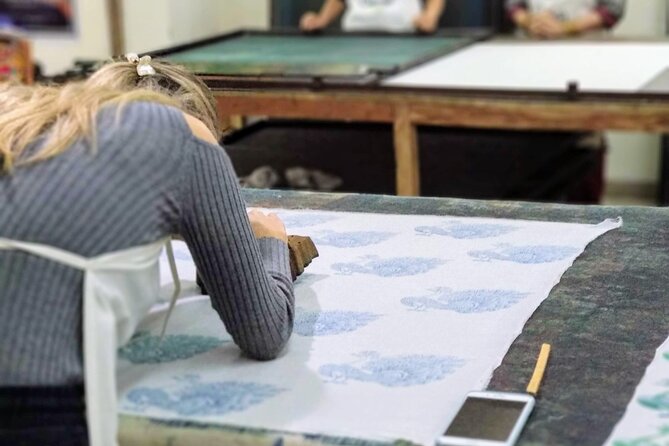
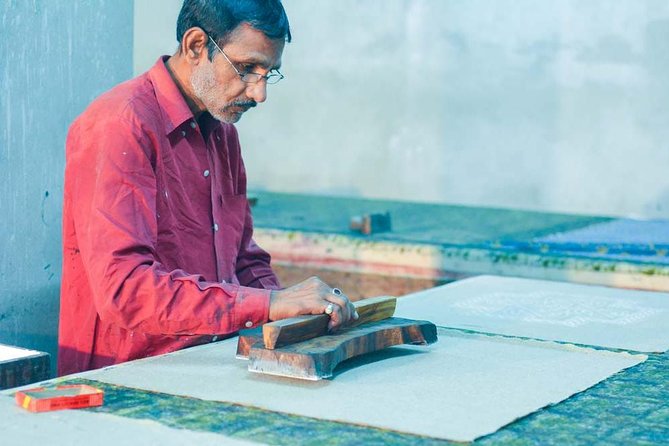
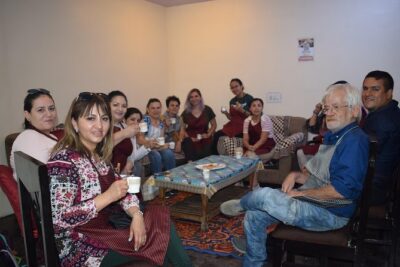
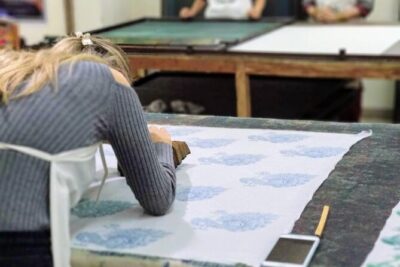
After that, you will move into the hands-on portion. You practice printing with wooden blocks, and you try different color combinations and layering techniques. This is where the workshop earns its reputation for being both social and focused. People nearby are doing the same type of work, so conversation comes naturally, but the printing process itself keeps pulling your attention back to the present moment.
The studio setup is also part of the charm. One highlight from the experience is the chance to be right next to a small factory and watch the pros at work. Even if you do not speak much during the class, seeing how the work looks outside the classroom makes your own learning feel grounded in real production, not a staged demo.
Gad, Rekh, Datte: the design system behind those complex patterns
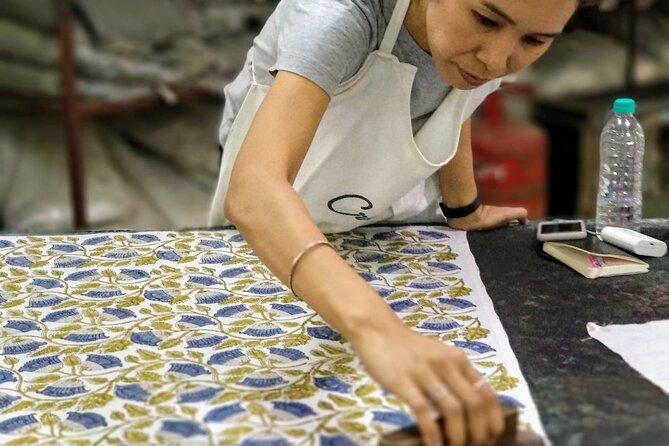
Block printing can look deceptively simple from far away. Up close, it is a puzzle. This workshop helps you solve it by teaching the basic roles of different carved blocks.
Here is the simple idea you work with:
- Gad (Ground) forms the background layer, setting the overall feel of the print.
- Rekh (Outline) creates the key lines that define shapes and structure.
- Datte (Filler) adds smaller details that make the design feel complete.
Instead of treating the blocks as random stamps, you learn how designs are built in steps. That gives you more confidence when you are picking from available patterns, because you understand what you are adding each time you print.
This also explains why the technique feels meditative to many people. Once you start placing block prints with intention, the work becomes repetitive but not mindless. You are responding to the evolving pattern, adjusting spacing and color choices, and watching how the design comes together.
Choosing your Sanganeri-inspired design and building it your way
You will choose from intricate designs inspired by Sanganeri prints. That is a smart choice of source material for a workshop, because Sanganeri-style patterning is both recognizable and structured, so it is easier to learn within a short session.
You also get help selecting your approach, either:
- A motive design, where the pattern centers around a specific repeat concept, or
- An all-over design, where you build a fuller surface pattern through repeated stamping.
If your booking includes access to a signature fabric collection, you can get additional options for fabric choices. The point is not just to pick something pretty. It is to choose a starting canvas that matches the type of design you want to create.
Then you put the method to work. You apply your designs onto fabric to create a one-of-a-kind scarf or sarong. The guidance is practical, so even if you are nervous at the start, you are not left to figure everything out alone.

Layering, color mixing, and water-based pigments on fabric
This is the part where you actually make choices that feel creative, not just technical. You learn to layer a design using water-based pigments, and you experiment with mixing and matching colors to create dynamic patterns.
Layering matters because it changes everything:
- A first pass sets the foundation.
- A second pass builds definition.
- Additional layers fill in details and make the pattern look intentional instead of flat.
Even with clear instructions, it can take a couple of attempts to get comfortable. That is normal. The workshop approach helps you learn by doing: print, observe, adjust, and try again. You end up with a design that reflects your style, not just someone else’s sample.
And yes, you will come away with more respect for the artisans. Block printing is a craft where small differences in alignment and pressure can affect the final look. One of the clearest lessons from the experience is that the printed outcome is only the last step. The skill lives in the precision and repetition before you even see the finished fabric.
Your Pico stitch scarf or sarong: what you take home
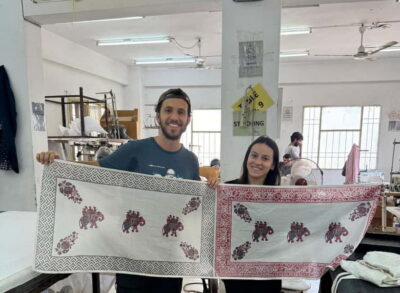
Your final product is the included Pico stitch scarf or sarong. In other words, you do not just practice on scrap fabric and call it a day. You create the piece you will actually wear, wrap, or gift.
The best part is that it is genuinely personal. Since you choose the pattern and your color approach, your scarf or sarong carries your decisions. It is also a nice souvenir because it is functional. You are not hunting for a place to display it later.
Guidance from the instructors also helps you get there. I especially like that the support is described as friendly, patient, and quick when mistakes happen. People noted help from instructors including Mohit, Vivek, and Aftab, including fixes when adjustments were needed. That matters for confidence. If you are worried about messing up, you do not have to be.
Practical advice for the day: wear comfortable clothing suitable for a hands-on workshop. Also, keep in mind pigments are part of the process, so you should plan for a creative work setting rather than a sit-and-watch museum moment.
The instruction style, language support, and small-group advantage
A workshop like this works or fails based on teaching quality, not just the craft itself. Here, the class is led with instruction available in English and Hindi, which is a big help if you want to understand what you are doing at the level of the design, not just copy the motions.
Small groups limited to 10 participants make it easier to get individualized attention. When your block printing is slightly off, you do not want to wait your turn while the class moves on. The smaller setup supports real help and keeps momentum.
The tone also seems to matter. The instructors are described as friendly and encouraging, and the overall environment feels sociable. That is a good combo. You can talk and share ideas, but you still have a clear task and a clear outcome.
One extra bonus is the chance to see professional work nearby. Being near the small factory gives context for what you are making. You understand that the designs are not just artistic experiments. They are grounded in a real workflow that artisans run day after day.
Price and value: is $24 for 2 hours actually fair?
At $24 per person for a 2-hour class that includes a Pico stitch scarf or sarong, this is good value if you treat it like a craft workshop, not a quick souvenir stop.
Here is why:
- You get instruction plus hands-on practice.
- You get materials provided, including wooden blocks, pigments, and fabric.
- You get a final wearable item included.
If you try to buy a similar finished piece later, you will often pay significantly more than the cost of a short workshop. Even without comparing exact market prices, you can judge this as a “learn + produce + take home” deal. You are paying for time, skill transfer, and the finished outcome.
The only time the price might feel less appealing is if you are not interested in making something yourself. If your goal is mostly sightseeing, you might prefer a different type of activity. But if you want a tactile, off-the-beaten-path experience with a practical result, the math works.
Who this workshop suits best, and who should think twice
This is a great fit if you:
- Like hands-on making and want a short creative break.
- Want something more authentic than buying a pre-printed item.
- Enjoy repetitive work with clear steps and feedback.
- Travel solo and want an activity that is sociable without being noisy.
It is also a strong choice if you are curious about how design elements work in real practice. Learning the roles of Gad, Rekh, and Datte gives you a framework you can use to understand other textiles you see in Rajasthan.
Consider thinking twice if you:
- Want a super slow, relaxed experience with lots of sitting and minimal doing. This class is practice-heavy.
- Hate the idea of getting your hands involved in a craft process. Even though the workshop is guided, it is still hands-on work.
- Expect a long cultural tour. This focuses on technique and making, with history and cultural significance introduced as part of the craft lesson, not as a full day lecture.
Before you go: small planning tips that help
The workshop is straightforward, but a few choices can make it easier:
- Wear comfortable clothing you are happy to work in.
- If you bring a small daypack, keep water handy and avoid overpacking bulky items.
- Arrive ready to pick a design and color approach fast, because the class is designed to move from intro to printing within the 2 hours.
If you want your scarf or sarong to match your style, decide ahead of time whether you want a motif-focused look or an all-over pattern feel. That way, you can focus on printing decisions once you are in the studio.
Should you book this Rajasthan block printing workshop?
Yes, you should book it if you want a hands-on Rajasthan experience that results in something wearable, made by your own hands, with real craft guidance. The combination of small-group attention, clear design logic (Gad, Rekh, Datte), and supportive instructors like Mohit, Vivek, and Aftab makes it a strong value at $24 for a full 2-hour session.
Skip it only if you want a passive activity or you are looking for something longer and purely sightseeing-focused. Otherwise, this is a practical, creative way to spend a couple of hours in Rajasthan, and you will walk away with a piece of art you can actually use.
FAQ
How long is the block printing workshop?
The workshop lasts 2 hours.
What is the price per person?
The price is $24 per person.
What’s included in the workshop?
The workshop includes a Pico stitch scarf or sarong.
How big is the group?
The group is limited to 10 participants.
What languages do the instructors speak?
The instructor speaks English and Hindi.
What techniques are you taught during the class?
You learn block printing basics, including using different types of blocks (Gad, Rekh, Datte), layering designs, and printing with water-based pigments. You also practice color mixing and layering techniques.
What should I bring?
Wear comfortable clothing suitable for a hands-on workshop.
Is there free cancellation, and can I pay later?
You can cancel up to 24 hours in advance for a full refund. You can also reserve now and pay later, keeping your travel plans flexible.
More to Make in Jaipur
- Pink City Cooking Class
★ 5.0 · 452 reviews - Jaipur Market Tour & Vegetarian Rajasthani Home Cooking Class
★ 5.0 · 113 reviews - Cooking Class in Jaipur – Family Experience with Meal & Transport
★ 5.0 · 101 reviews - Interactive Cooking Class with a Local Family in Jaipur
★ 5.0 · 90 reviews - Jaipur: Block Printing Workshop and Hands-on Experience
★ 5.0 · 78 reviews - Hands-on Block Printing Workshop
★ 5.0 · 76 reviews
More Tour Reviews in Jaipur
- Jaipur: Private Full Day Sightseeing Tour By Car with Guide
★ 4.9 · 1,839 reviews - 3-Hour Morning Bike Tour of Jaipur
★ 5.0 · 1,253 reviews - Jaipur: Private Sightseeing Day Tour with Guide by Car
★ 4.8 · 773 reviews - Jaipur: Full-Day City Tour with Car, Guide & Skip-the-Line
★ 4.8 · 512 reviews - Full-Day Jaipur Private Sightseeing Tour by Car with Guide
★ 5.0 · 472 reviews - Pink City Cooking Class
★ 5.0 · 452 reviews
Fresh on the site: newer Jaipur tours we have written up



Jaipur Block Printing & Craft Workshops, compared.
 ★ 5.0Private Jaipur Full-Day Tour with Block PrintingFrom $13206 reviews
 ★ 5.0Learn Hand Block Printing Techniques & Print Your Own FabricFrom $3595 reviews
 ★ 5.0Block Printing Workshop and Hands-on ExperienceFrom $3578 reviews
 ★ 5.0Hands-on Block Printing WorkshopFrom $2576 reviews
 ★ 5.0Block Printing & Village Stories: Discover Bagru’s Craft LegacyFrom $5842 reviews
 ★ 5.0Shopping Tour with Blue Poetry & Printing Workshop & RugsFrom $2242 reviews
 ★ 5.0Block Printing Workshop in Jaipur! (including lunch)From $5634 reviews
 ★ 5.0Jaipur cultural tour with artisan craft experienceFrom $2333 reviews
Browse the lists this tour appears in