
Jaipur in one guided day, without the hassle. You will cruise in an air-conditioned car and hit major landmarks like Jal Mahal, while your guide strings the stories together in plain, human terms. You also get time for photo-worthy stops and lively market vibes without spending hours figuring out logistics.
Two things I like a lot: the hotel pickup and drop-off, and the fact that your day is built around big sights with entry included at each stop. The Jantar Mantar UNESCO observatory and the palace sights make this feel like a real sightseeing loop, not just a drive-by.
One thing to consider is the full-day pace. With multiple monuments and a return to your hotel around 5 PM, comfortable shoes and a realistic attitude toward crowds will help.
Key highlights you should actually care about
- Private guide just for your group: you can ask questions and move at a practical pace.
- A/C car with hotel pickup: the long drives in Jaipur feel easier when you start and end at your hotel.
- Admission included for the main stops: you spend more time seeing, less time sorting tickets.
- A focused monument route: Jal Mahal, Hawa Mahal, City Palace, Jantar Mantar, and Patrika Gate, in a logical order.
- Lunch break plus market time: you get a breath in the middle, not just rapid-fire sightseeing.
- Driver and guide teamwork: guides like Kasana, Yogi, and Akshay have been praised for helpful explanations and making visitors feel safe.
Other guides worth the fee
- Jaipur: Private Full Day Sightseeing Tour By Car with Guide★ 4.9 · 1,839 reviews
- Jaipur: Private Sightseeing Day Tour with Guide by Car★ 4.8 · 773 reviews
- Jaipur: Full-Day City Tour with Car, Guide & Skip-the-Line★ 4.8 · 512 reviews
- Full-Day Jaipur Private Sightseeing Tour by Car with Guide★ 5.0 · 472 reviews
Why this full-day loop works so well in Jaipur
Jaipur is beautiful, but it can be tiring if you try to piece together a day on your own. This tour is designed to do the hard part for you: pick you up, cover the major sights, and get you back home before the day turns into a sweaty blur.
You are looking at about 7 to 8 hours on the ground. In that time, you will see the signature Jaipur icons, plus the observatory that shows the city also cared about science. It is also a private experience, meaning it is only your group. That matters because you are not stuck waiting for strangers to decide whether they want to go inside.
Value is strong here because the day stacks multiple expensive time-savers. You get transportation by air-conditioned sedan or SUV, a professional private guide, hotel pickup and drop-off, and parking or tolls handled. Even better, entry tickets are included at the main stops, so you are not hunting down separate fees right when you are ready to move.
The small catch is that you should treat this as a day of highlights, not slow travel. You will walk, you will do stairs and viewpoints, and you will want water and patience.
Jal Mahal at the start: the Water Palace moment
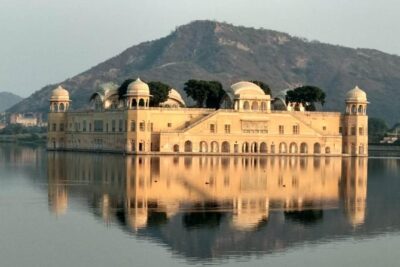
The day begins around 8 AM, and your first big stop is Jal Mahal. The attraction here is not only the building itself, it is the setting. This is the famous Water Palace look, where the structure appears to rise from the water, creating that postcard feel you want in Jaipur.
You will spend about 2 hours on this stop. That is enough time to take photos without feeling rushed, and enough time to learn what you are seeing beyond the surface look. A guide’s job here is to help you place Jal Mahal in context, so it is not just a pretty scene.
Practical tip: bring a hat or something for sun protection. Jal Mahal is a great place for viewing and pictures, and Jaipur light can be intense. Also, wear shoes with good grip. You are in a busy tourist area where surfaces can be uneven.
If you are the type who likes to photograph details, Jal Mahal is a good warm-up stop because it gets you oriented. You start to notice color, architecture lines, and the way buildings frame the water.
Hawa Mahal: windows, views, and the short visit that still matters
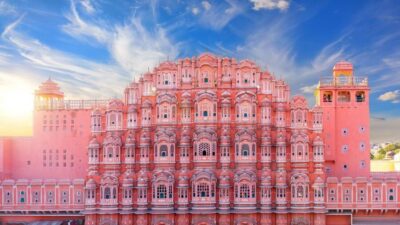
Next comes Hawa Mahal, the Palace of Wind. The headline feature is right there: many windows. The idea was for royal women to observe life and street activity while staying protected. Even if you do not care about the political details, the design is fun to study.
You will have about 1 hour here. That sounds short, but it is the right length for Hawa Mahal because you can see what you need quickly, then spend the time understanding why it was built this way. Your guide can point out the window pattern and how the palace sits on the edge of City Palace.
One thing I appreciate about this tour pacing is that Hawa Mahal is not stretched into an all-day production. You get the essentials, plus you move on while you still have energy for City Palace and Jantar Mantar.
Photo tip: if your camera battery is low, this is a good time to swap or charge if possible. Hawa Mahal is a frequent repeat photo spot, because the building reads so well from multiple angles.
City Palace: where you go from icon to context
Then you are into City Palace of Jaipur. This is where Jaipur starts feeling more like a living city than a collection of landmarks.
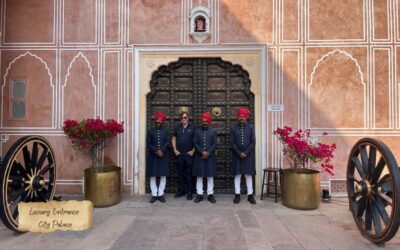
You will spend about 2 hours at City Palace, and it is a strong use of time because the palace is big, layered, and tied to the city’s founding era. It was established in 1727 by Maharaja Sawai Jai Singh II. The architecture is described as a blend of Mughal and European influences, which is part of why City Palace feels different from the purely fortress-like sites.
The practical win here is that your guide can slow things down for you. Palace sights can feel like a blur if you just walk from room to room. With a good guide, you get names, dates, and the reason the layout makes sense. Guides like Yogi have been praised for explaining details clearly and speaking excellent English, so if that is your preference, you can enjoy City Palace even more.
What to watch for: the way rooms and courtyards connect, and how the palace functioned as a center of rule and ceremony. Even if you only catch a handful of rooms, you will walk away with a better sense of who built what and why.
Drawback to plan for: City Palace can bring crowds. If you like quiet, aim to keep your expectations realistic. Still, having a guide helps you spend your time well instead of just waiting for a gap to take photos.
More full days across Jaipur
Jantar Mantar: the UNESCO observatory that makes sense of the sky
After City Palace, you head to Jantar Mantar. This is an observatory, with 19 astronomical instruments, and it is a UNESCO World Heritage site. If you think Jaipur is all forts and palaces, this stop is the proof that the city also cared about measurement and the sky.
You will have about 1 hour here. That is enough to see the big instruments and understand the key idea: these structures were built to observe and calculate. Your guide’s explanations can turn the shapes into something you can picture. This is also where your visit shifts from visual enjoyment to mental engagement.
One thing I like about including Jantar Mantar in a day like this is balance. Palace stops can blend together. Observatories reset your attention, and it gives you a different angle on Rajasthan’s intellectual life.
Practical tip: it is an open area, so sun and glare matter. Bring water, stay aware of the heat, and take breaks if you need them. Jantar Mantar is also a great place to ask questions, because your guide can often connect what you see to how people used the instruments.
Patrika Gate: a short photo stop with big design impact
Your final sightseeing stop is Patrika Gate, a well-known photography spot at Jawahar Circle in Jaipur. If you like clean visual lines, this is the place to use them.
You spend about 1 hour here, and the goal is straightforward: get your photos, walk the complex pathways at a comfortable pace, and appreciate the opulent design. Even if you are not a serious photographer, this stop gives your day a modern-feeling finish, compared with palace-heavy earlier hours.
What makes it memorable is the contrast. After City Palace and Jantar Mantar, Patrika Gate adds color, angles, and a playful architecture layout. It also helps you end your day with something that feels lighter.
Practical tip: wear something you can move in. You will likely walk around and look for good angles.
Lunch break and market time: how to use the downtime well
Between major monuments, you get a lunch break so you can stay energized. Jaipur is a hot city, and a mid-day pause matters. Without it, the afternoon can turn into crankiness, and you end up rushing stops just to recover.
The tour also mentions time to soak up lively local markets. That is a big part of Jaipur’s charm, because you are not only looking at buildings. You are seeing the city’s everyday energy, the textures, the colors, and the small details that never show up on postcards.
My advice: use market time with a simple goal. Pick one or two things to look for, like small gifts or textiles, and keep your budget in mind. If shopping turns into decision fatigue, you will feel it later at the palace stops.
Also, if you want photos in markets, keep an eye on respectful behavior and timing. It is easy to treat photo-taking like a sport, but the best experience comes from being calm and mindful.
Price and logistics: what $48 really buys you
At $48 per person for a 7 to 8 hour guided day, the value is mostly in the bundle.
Here is what you effectively pay for:
- A/C transport in a mid-size sedan or SUV
- Hotel pickup and drop-off
- A professional private guide
- Fuel, parking charges, tolls, and transfers covered
- Admission tickets included for the main stops (based on the stop descriptions)
What you typically do not pay for:
- Personal expenses
- Accommodation or hotels
If you tried to replicate this on your own, you would quickly spend money on multiple tickets, plus you would pay for transport between widely spaced sites. You might also lose time negotiating rides and waiting around. This tour reduces that friction. You trade a fixed price for a smoother day.
If you are traveling with someone else, the group discount angle can make it even more reasonable. The key point is that it is not just a ride. It is a guided circuit designed to hit the highlights without you spending hours planning.
Choosing your guide and getting more out of the day
This tour is private, so your guide matters. The good news is that the experience you want is strongly supported by how guides have been described by past visitors.
Names that show up in that feedback include Kasana, Yogi, Yogesh, Akshay, and drivers such as Shahid and Vijendra. People praised helpful, polite guidance, safe feeling, and clear explanations, including strong English from at least one guide.
You cannot control who you get, but you can maximize your odds. I recommend starting your day with two questions:
1) What is the one thing most people miss at each stop?
2) What should I photograph first, before it gets crowded?
Also, ask for small pacing advice. If your group has mobility limits or you want more photos, your guide can often adjust how you move through spaces.
Comfort and timing: practical tips for a smoother day
This is a full-day tour, so your small choices matter.
- Start early mindset: the tour runs from about 8 AM and finishes around 5 PM. If you wake up late, you will feel behind all day.
- Wear comfortable shoes: palaces and observatories involve walking and uneven surfaces.
- Bring water and sun protection: open-air time at Jantar Mantar and photo stops in bright light will add up.
- Keep your camera charged: you will have multiple chances to photograph Hawa Mahal, City Palace, and Patrika Gate.
- Use the car time: air-conditioned rides help you recover between stops, so you arrive ready to enjoy the next site instead of already tired.
If you are sensitive to heat, you will probably appreciate the A/C car even more. The tour design includes regular transitions between indoor or shaded areas and open-air viewing.
Should you book this Jaipur City Tour?
Book it if you want a high-efficiency Jaipur day. You get major monuments, a private guide, hotel pickup, A/C transport, and a mid-day lunch break. It is the kind of tour that works well when you only have one day and you want to feel like you truly saw Jaipur.
Skip it or think twice if your style is slow wandering with lots of stops of your own choosing. This is a structured route, and the full-day schedule means you may not get the freedom to linger forever in one place.
If you are deciding, I’d base it on this: do you want the reassurance of a planned route with tickets handled and guidance on what you are seeing? If yes, this is a solid way to spend your time in the Pink City.
FAQ
How long is the Full Day Tour of Jaipur with Guide?
The tour runs for about 7 to 8 hours.
Is hotel pickup and drop-off included?
Yes, hotel pickup and drop-off are included.
What sights are visited during the tour?
You visit Jal Mahal, Hawa Mahal, City Palace, Jantar Mantar, and Patrika Gate.
Are admission tickets included?
Admission tickets are included for the listed sightseeing stops.
Is there a lunch break?
Yes, there is a lunch break during the day, and you also get some time to enjoy the local markets.
What is included in the tour price, and what is not?
Included are A/C transportation, sightseeing and transfers, driver and guide allowances, fuel, parking and tolls, and the professional private guide, plus hotel pickup and drop-off. Not included are personal expenses and accommodation or hotels.
What is the cancellation policy?
You can cancel for free up to 24 hours in advance for a full refund. If you cancel less than 24 hours before the start time, the amount paid is not refunded.
More Guided Days in Jaipur
- Jaipur: Private Full Day Sightseeing Tour By Car with Guide
★ 4.9 · 1,839 reviews - Jaipur: Private Sightseeing Day Tour with Guide by Car
★ 4.8 · 773 reviews - Jaipur: Full-Day City Tour with Car, Guide & Skip-the-Line
★ 4.8 · 512 reviews - Full-Day Jaipur Private Sightseeing Tour by Car with Guide
★ 5.0 · 472 reviews - Private Guided Half Day Tour Jaipur
★ 5.0 · 371 reviews - Jaipur Full-Day Private Tour By Car, Guide & Skip-the-Line Entry
★ 5.0 · 328 reviews
More Tours in Jaipur
- Jaipur: Private Full Day Sightseeing Tour By Car with Guide
★ 4.9 · 1,839 reviews - 3-Hour Morning Bike Tour of Jaipur
★ 5.0 · 1,253 reviews - Jaipur: Private Sightseeing Day Tour with Guide by Car
★ 4.8 · 773 reviews - Jaipur: Full-Day City Tour with Car, Guide & Skip-the-Line
★ 4.8 · 512 reviews - Full-Day Jaipur Private Sightseeing Tour by Car with Guide
★ 5.0 · 472 reviews - Private Full Day Jaipur Sightseeing Tour By Tuk Tuk
★ 5.0 · 382 reviews
More Tour Reviews in Jaipur
- Jaipur: Private Full Day Sightseeing Tour By Car with Guide
★ 4.9 · 1,839 reviews - 3-Hour Morning Bike Tour of Jaipur
★ 5.0 · 1,253 reviews - Jaipur: Private Sightseeing Day Tour with Guide by Car
★ 4.8 · 773 reviews - Jaipur: Full-Day City Tour with Car, Guide & Skip-the-Line
★ 4.8 · 512 reviews - Full-Day Jaipur Private Sightseeing Tour by Car with Guide
★ 5.0 · 472 reviews - Pink City Cooking Class
★ 5.0 · 452 reviews
Fresh on the site: newer Jaipur tours we have written up




Full-Day, compared.
 ★ 4.9Private Full Day Sightseeing Tour By Car with GuideFrom $41,839 reviews
 ★ 4.8Private Full-Day Sightseeing Tour by Tuk-TukFrom $2573 reviews
 ★ 4.8Full-Day City Tour with Car, Guide & Skip-the-LineFrom $9512 reviews
 ★ 5.0Private Full Day Jaipur Sightseeing Tour By Tuk TukFrom $5382 reviews
 ★ 5.0Jaipur Full-Day Private Tour By Car, Guide & Skip-the-Line EntryFrom $6328 reviews
 ★ 4.9Private Full-Day Guided City TourFrom $22308 reviews
 ★ 5.0Private Full Day Tour of Jaipur with GuideFrom $40275 reviews
 ★ 5.0Full-day Jaipur Private Sightseeing Tour by Car with GuideFrom $75240 reviews