
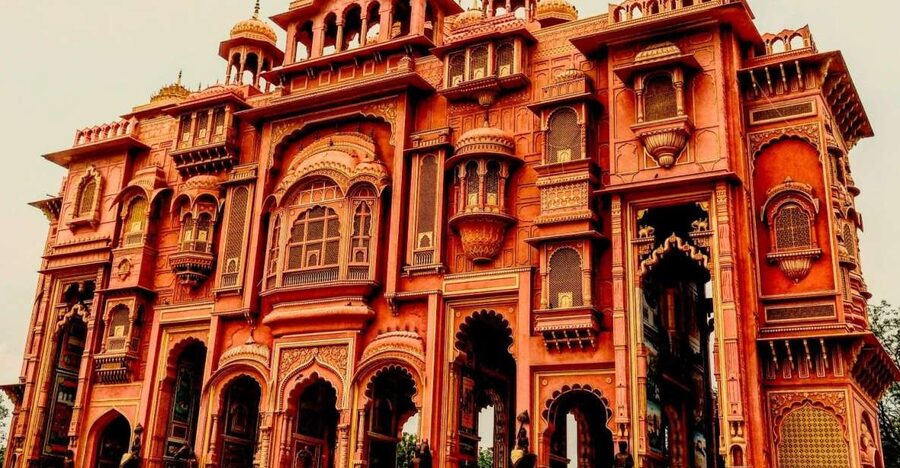
Amber at dawn, bazaars by dusk.
The ramp up to Amber before the coaches, Hawa Mahal’s pink lattice from the tea house opposite, thali in Chandpole and the long road out to Ranthambore. What each one is like, what it costs, and where to book it.
Start at the fort and work downhill.
Jaipur rewards an early start and a driver who knows which gate opens first. These are the days that carry a first visit: Amber before the crowds, the old city on three wheels, a kitchen in a family house, and one very long morning at the Taj.
Private Full Day Sightseeing Tour By Car with Guide
Private Jaipur full-day tour by car with an expert guide, hitting Amber Fort, Hawa Mahal, City Palace, Jantar Mantar, and more.
From $4 per person
Read the review →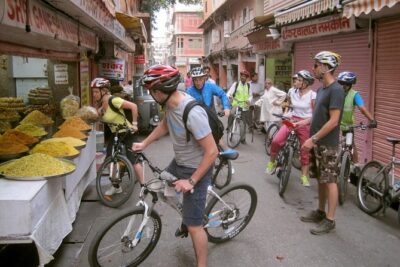 ★ 5.0Books out fast3-Hour Morning Bike Tour of JaipurFrom $321,253 reviews
 ★ 4.8Sunrise slotPrivate Sightseeing Day Tour with Guide by CarFrom $5773 reviews
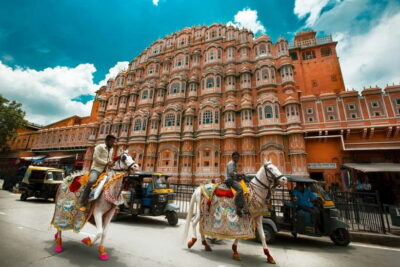 ★ 4.8Crowd favouriteFull-Day City Tour with Car, Guide & Skip-the-LineFrom $9512 reviews
 ★ 5.0Half a dayPink City Cooking ClassFrom $27452 reviews
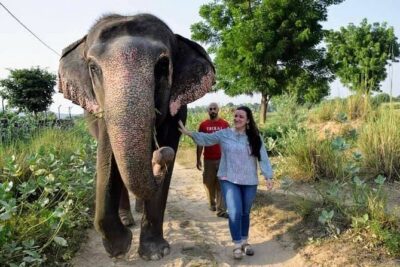 ★ 5.0Easy winPrivate Elephant SanctuaryFrom $80390 reviews
 ★ 5.0Local favouritePrivate Full Day Jaipur Sightseeing Tour By Tuk TukFrom $5382 reviews
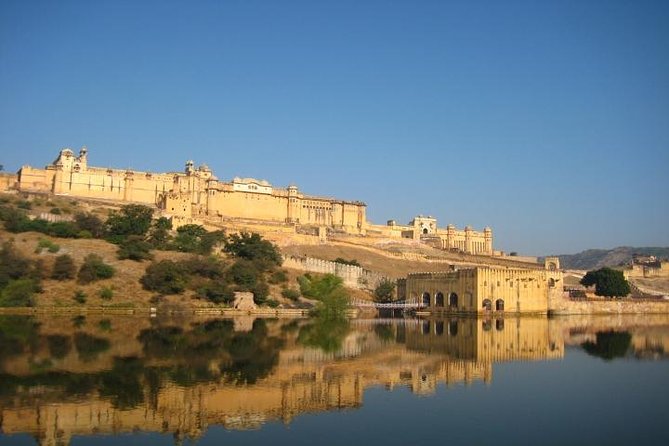
Amber is a morning, not a photo stop.
The cobbled ramp from Maota Lake takes twenty minutes on foot and repays every one of them. Inside: the mirrored Sheesh Mahal, the Ganesh Pol, courtyards that keep going after you think they have stopped. Add Jaigarh above it for the cannon and the view back over the walls, and the fort day is done by lunch.
How do you want to see the old city?
Everything inside the pink walls is close together and almost nothing is easy to park near. Three ways people actually do it, and what each one costs you in time, comfort and detail.
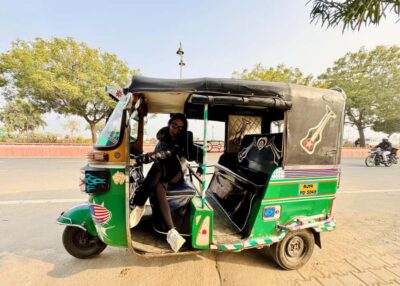 Open sided
By tuk-tuk
from $2 · 573 reviews
The old city was drawn for something this size. A tuk-tuk slips through Tripolia Bazaar where a car simply stops, parks anywhere, and puts you at eye level with the shopfronts. Hot in May, perfect in December. Best for a first full day when you want to cover the nine gates without walking them.
See the tuk-tuk days →
Open sided
By tuk-tuk
from $2 · 573 reviews
The old city was drawn for something this size. A tuk-tuk slips through Tripolia Bazaar where a car simply stops, parks anywhere, and puts you at eye level with the shopfronts. Hot in May, perfect in December. Best for a first full day when you want to cover the nine gates without walking them.
See the tuk-tuk days →
 Slow and close
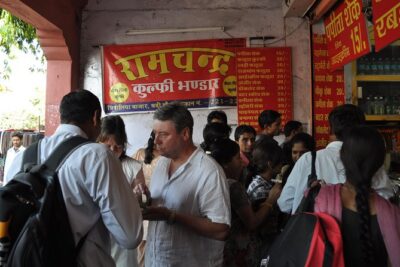
On foot through the bazaars
from $37 · 281 reviews
Two or three hours between Chandpole and Johari Bazaar, down the lanes where the lac bangles are actually made and the kachoris come out of the oil at eight. You cover less ground and understand far more of it. Mornings and evenings only, for obvious reasons.
See the walking routes →
Slow and close
On foot through the bazaars
from $37 · 281 reviews
Two or three hours between Chandpole and Johari Bazaar, down the lanes where the lac bangles are actually made and the kachoris come out of the oil at eight. You cover less ground and understand far more of it. Mornings and evenings only, for obvious reasons.
See the walking routes →
 Air-conditioned
By car with a guide
from $60 · 182 reviews
Amber, Jaigarh, Nahargarh and Jal Mahal are spread across hills and a lake; a car turns that from a logistics problem into a day. You get the cool seat between stops and someone who books your Amber ticket while you walk. The default choice in the heat and with children.
See the private car days →
Air-conditioned
By car with a guide
from $60 · 182 reviews
Amber, Jaigarh, Nahargarh and Jal Mahal are spread across hills and a lake; a car turns that from a logistics problem into a day. You get the cool seat between stops and someone who books your Amber ticket while you walk. The default choice in the heat and with children.
See the private car days →
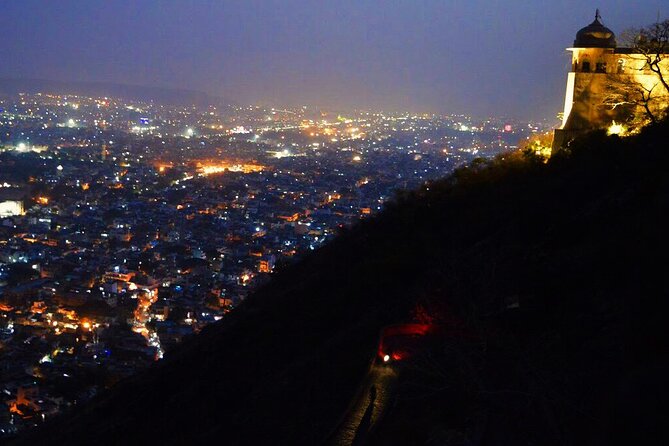
The city changes colour at six.
Nahargarh’s terrace catches the last light and the whole grid comes on underneath it. Down in the old city the aarti bells start at Govind Dev Ji, the sweet shops on Johari Bazaar are three deep, and Chokhi Dhani lights its lamps out on the Tonk road. Evening is when Jaipur stops being hot and starts being a night out.
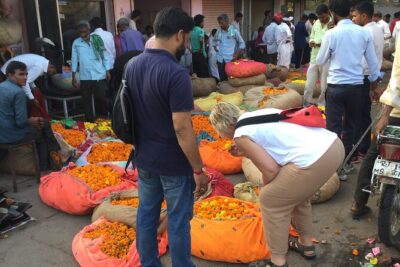
The bazaar is the restaurant.
Pyaaz kachori at Rawat before nine, dal baati churma where the plate arrives already ghee-soaked, lassi in a clay cup on Johari Bazaar. A guide gets you past the stalls that only look busy.
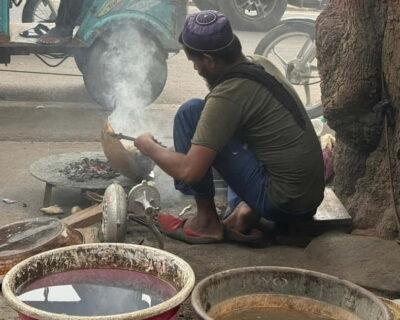
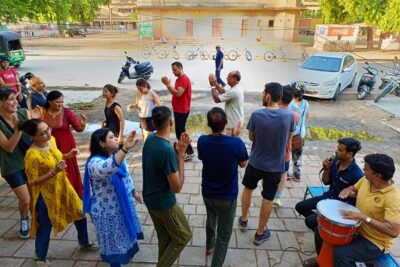
Come home with indigo on your hands.
Sanganer and Bagru still print by hand, block after block, and the workshops will hand you the teak stamp and let you ruin a metre of cotton learning. Blue pottery, gem cutting and puppet making sit in the same afternoon.
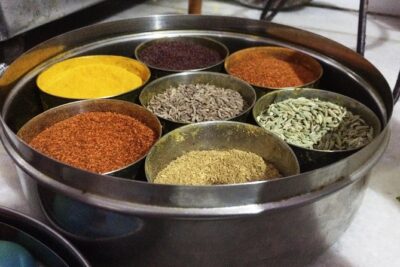


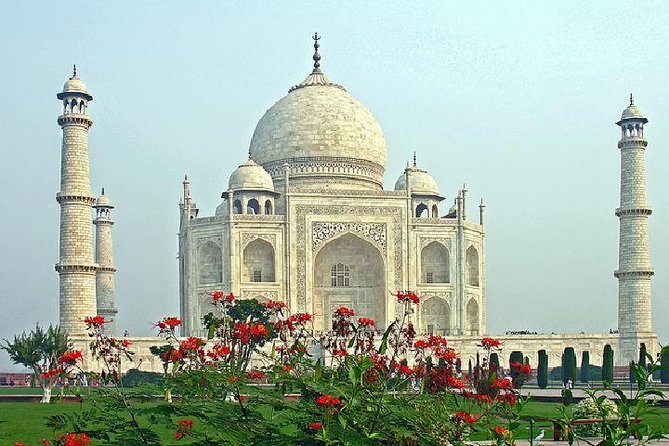
The Taj is four hours down the expressway.
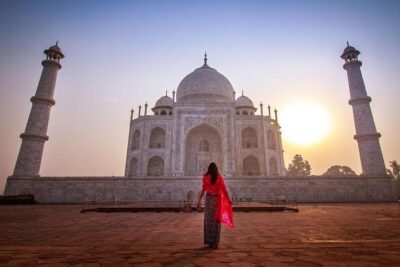
Leave Jaipur at three in the morning and you are at the east gate for sunrise, marble going pink then white while the crowd is still thin. Agra Fort after breakfast, Fatehpur Sikri or the Chand Baori stepwell on the way back, home for dinner. It is a brutal day and nobody who does it regrets it.
Pick your Jaipur, landmark by landmark.
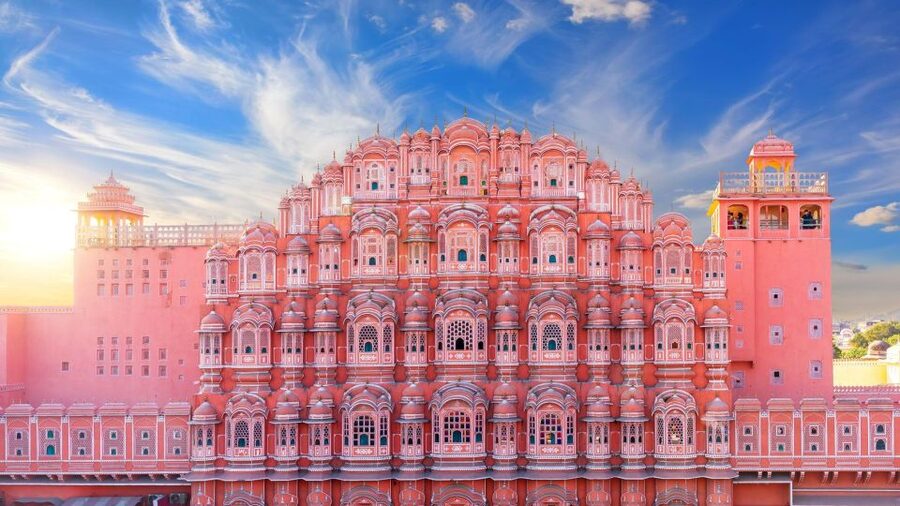
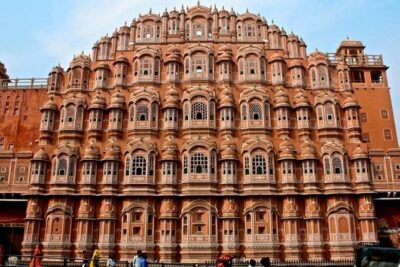
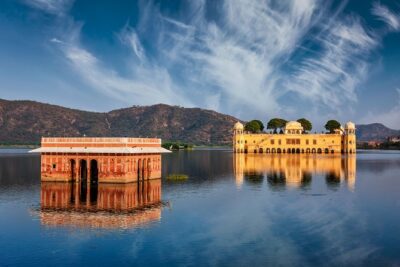
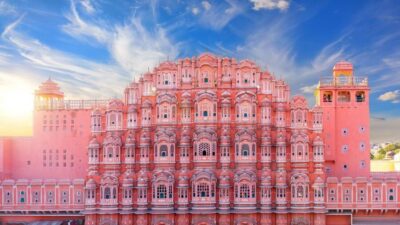
Amber for the morning climb. Hawa Mahal for the facade and the coffee opposite. Jal Mahal for the water at dusk. Nahargarh for the whole city laid out below you. Galtaji when the monkeys come down to drink.

Know how you like to travel?
Twelve ways into the same city. Pick the one that sounds like your kind of day and everything behind it is already priced and reviewed.

Rajasthan starts at the city gate.
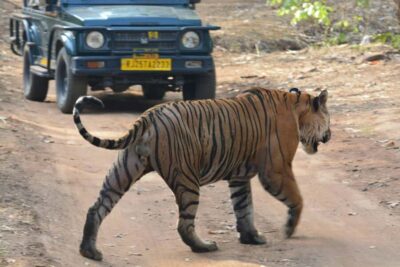
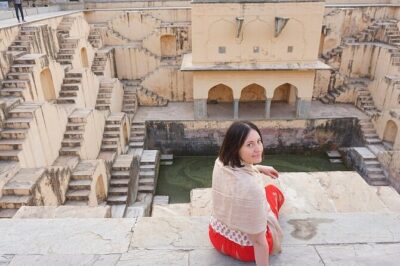
Tigers at Ranthambore, a stepwell at Abhaneri that looks computer-generated and is nine hundred years old, the ghats at Pushkar, and the Taj itself. All of them are a drive, none of them needs a second hotel.
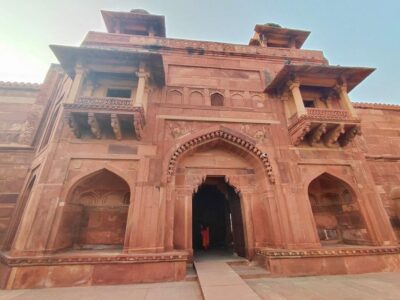
Three days, in the right order.
Jaipur is small enough to see properly and hot enough to punish a bad plan. Forts while it is cool, bazaars once the shops open, and the long drive on the day you are willing to lose a lie-in.
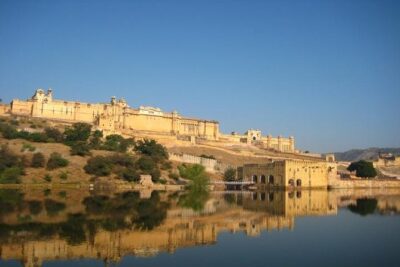 Day 1
The hill forts
Amber at opening, Jaigarh for the cannon and the ramparts, Jal Mahal on the way back down. Late lunch, then nothing until Nahargarh at sunset.
Plan day one →
Day 2
Inside the pink walls
City Palace and Jantar Mantar before the sun is high, Hawa Mahal from the terrace opposite, then Johari and Bapu bazaars on foot until your bag is full.
Plan day two →
Day 1
The hill forts
Amber at opening, Jaigarh for the cannon and the ramparts, Jal Mahal on the way back down. Late lunch, then nothing until Nahargarh at sunset.
Plan day one →
Day 2
Inside the pink walls
City Palace and Jantar Mantar before the sun is high, Hawa Mahal from the terrace opposite, then Johari and Bapu bazaars on foot until your bag is full.
Plan day two →
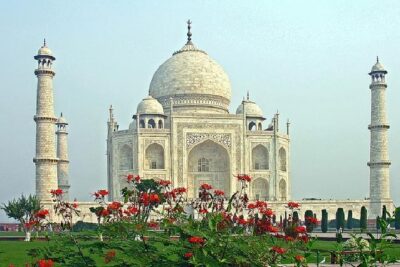 Day 3
The road out
Either the 3am run to the Taj for sunrise, or a gentler morning to Ranthambore for the tiger jeeps. Both leave in the dark and both are worth the alarm.
Plan day three →
Day 3
The road out
Either the 3am run to the Taj for sunrise, or a gentler morning to Ranthambore for the tiger jeeps. Both leave in the dark and both are worth the alarm.
Plan day three →
Newest Jaipur tour reviews.
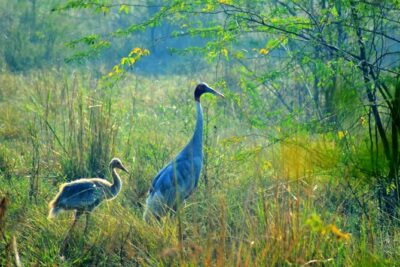 ★ 5.0From Jaipur: Bird Safari and Agra sightseeing All-InclusiveFrom $1133 reviews
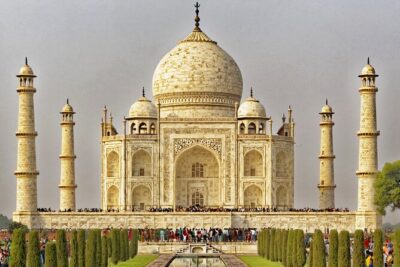 ★ 5.0Private Taj Mahal & Abhaneri Stepwell Day Trip from JaipurFrom $543 reviews
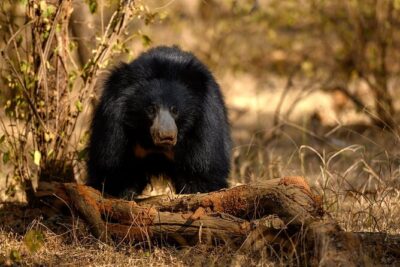 ★ 5.0Jaipur to Ranthambore Same Day Tiger SafariFrom $1103 reviews
Wheelchair Accessible Private Day TourFrom $383 reviews
★ 5.0Jaipur to Ranthambore Same Day Tiger SafariFrom $1103 reviews
Wheelchair Accessible Private Day TourFrom $383 reviews
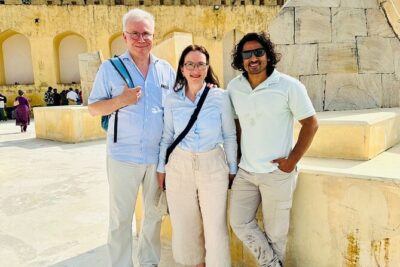 ★ 5.0Jaipur Private Full Day City Tour with Pick Up and Drop OffFrom $403 reviews
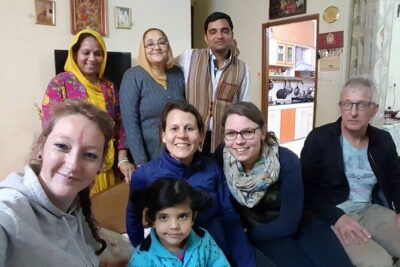 ★ 5.0Private Half Day Jaipur Guided TourFrom $453 reviews
 ★ 5.0From Jaipur Private Taj Mahal & Agra Fort Day tour with TransfersFrom $863 reviews